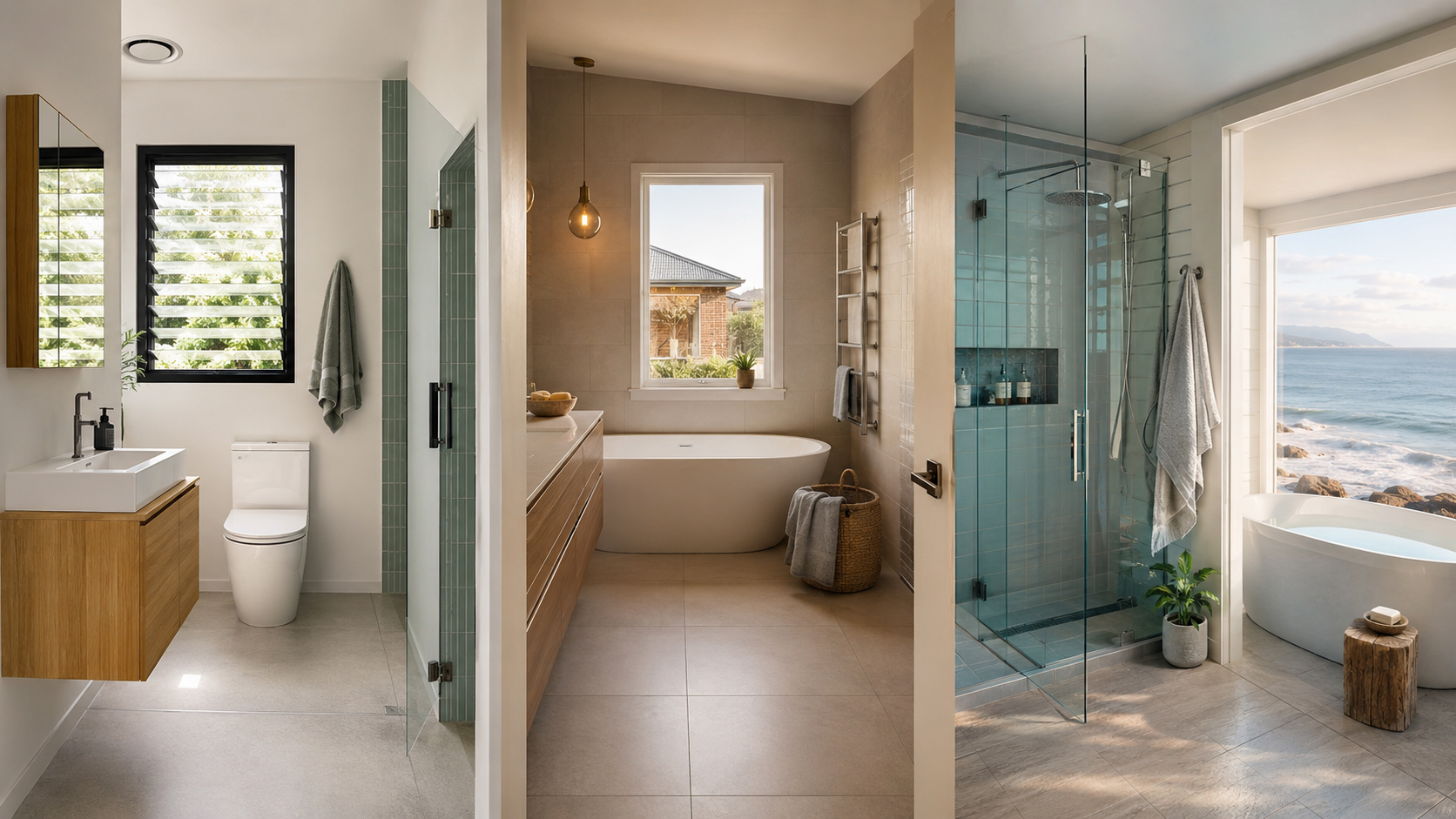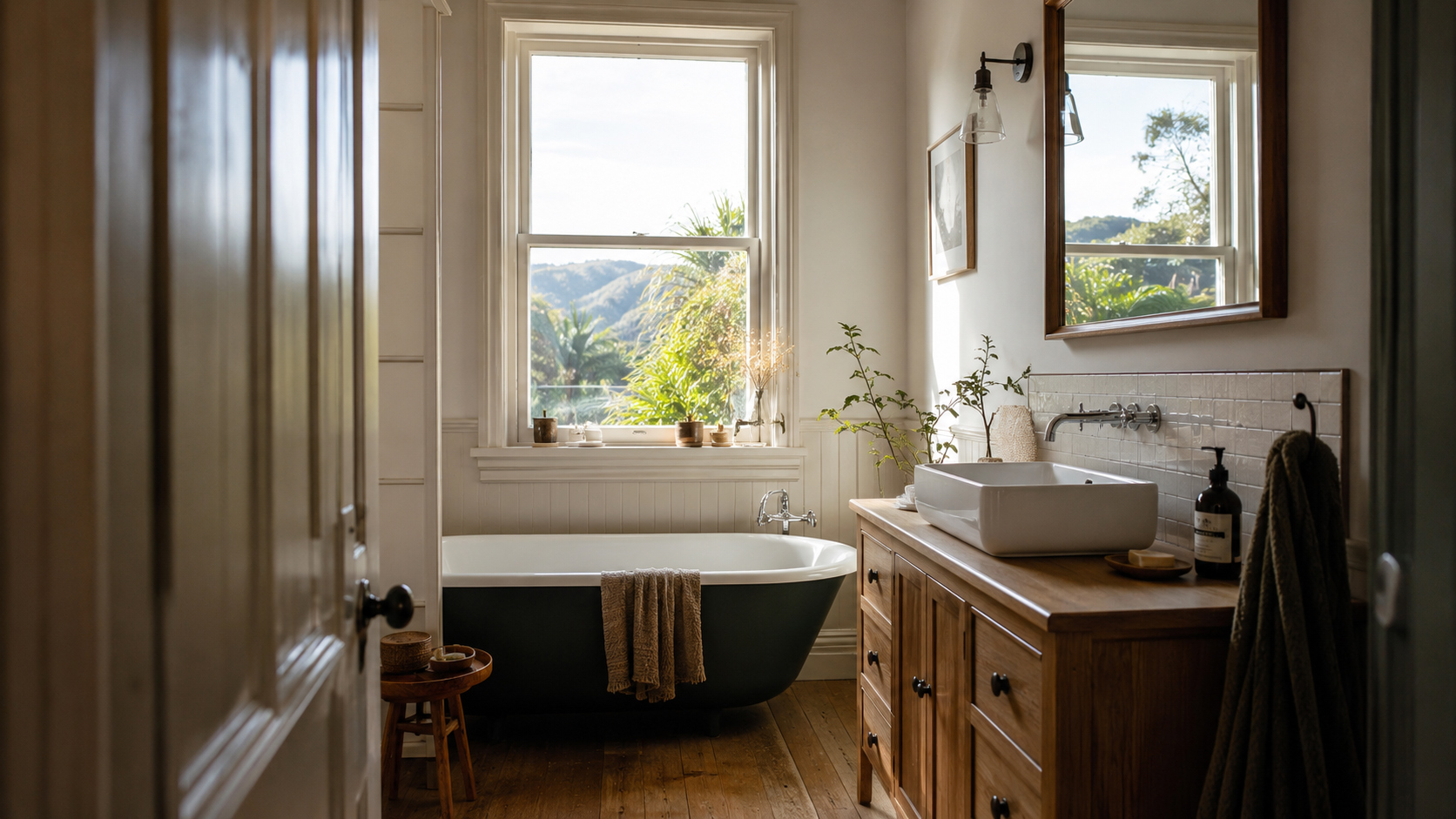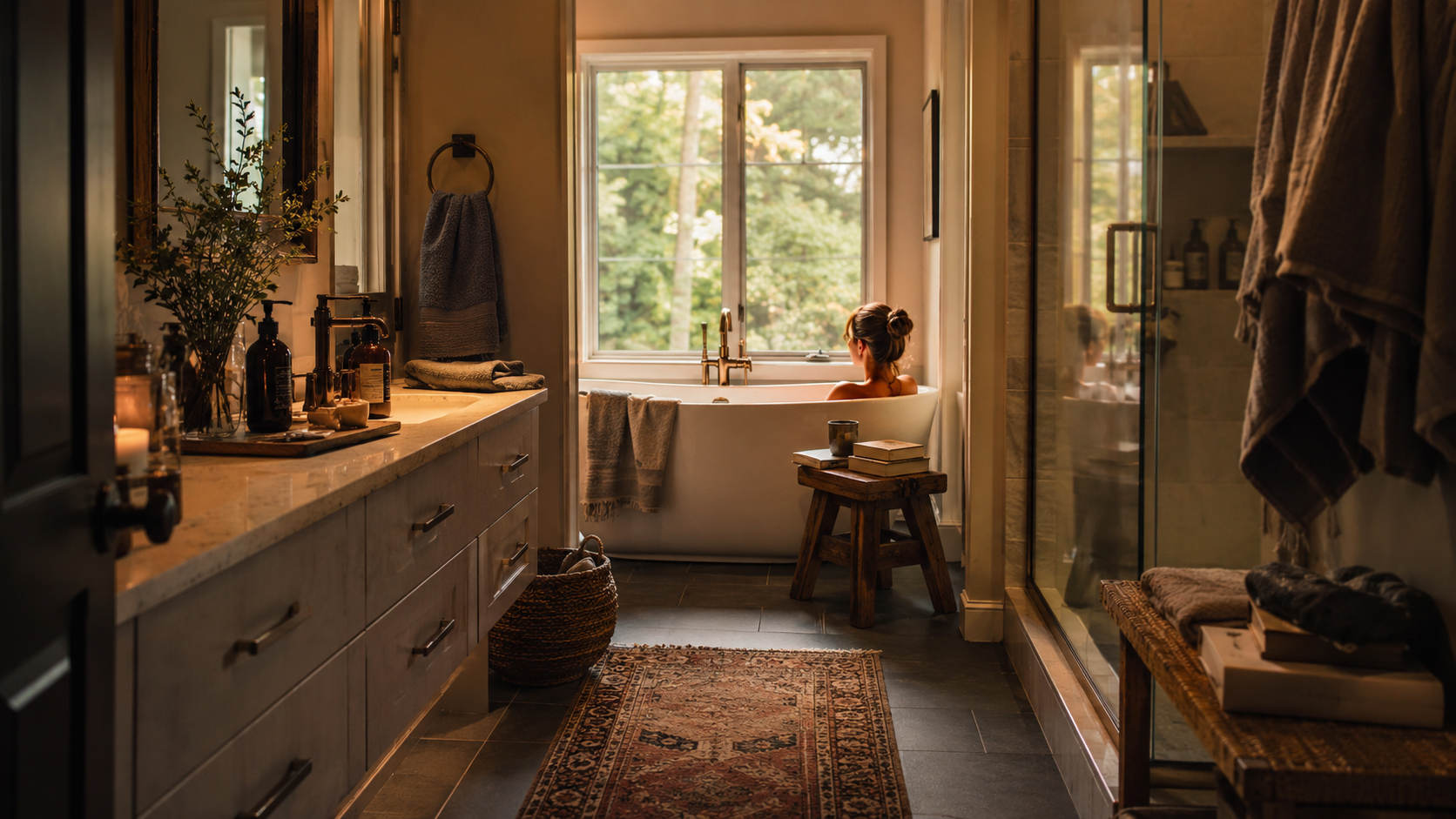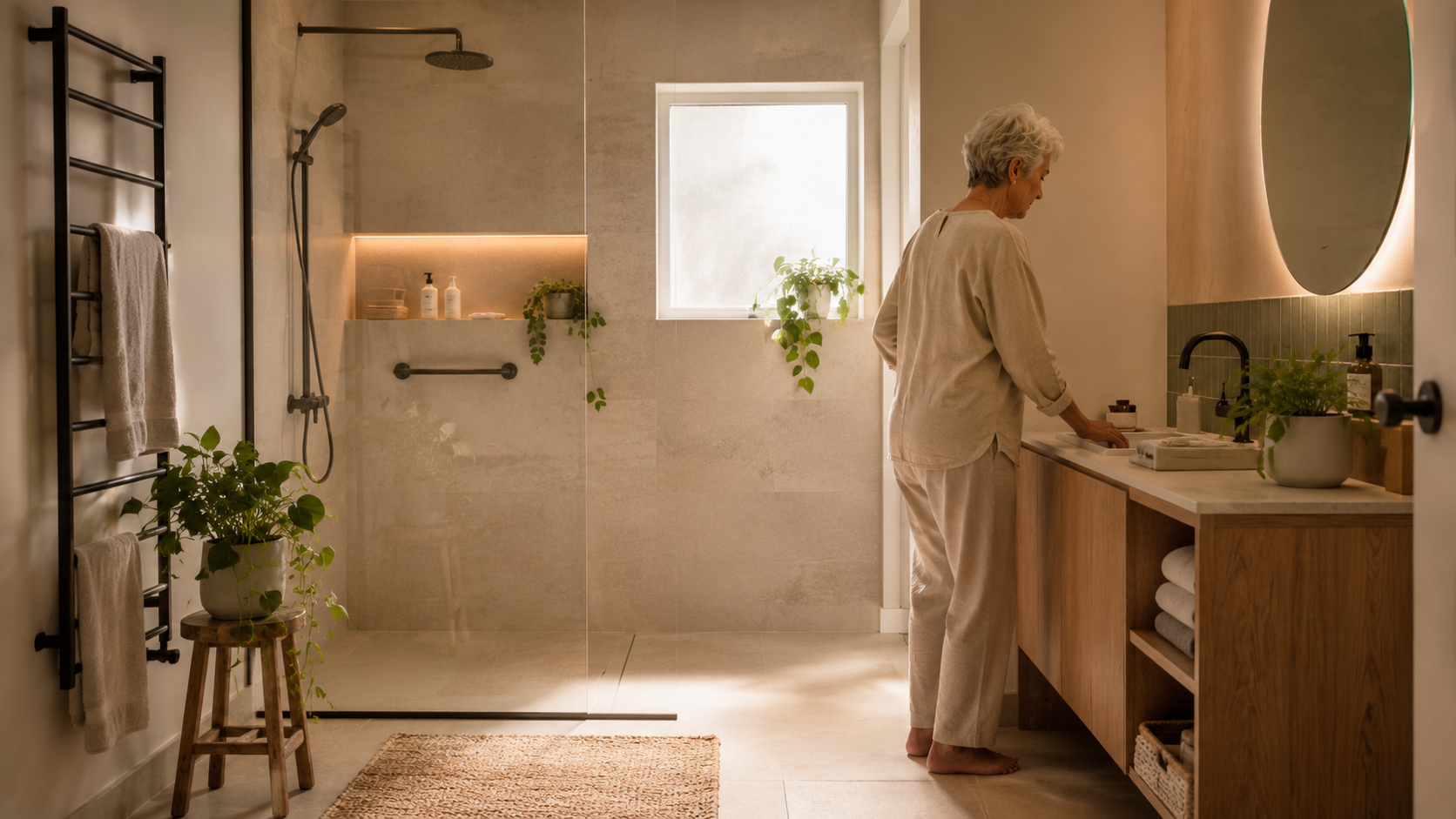
Preface
Why the Bathroom Matters
The Smallest Room With the Biggest Questions
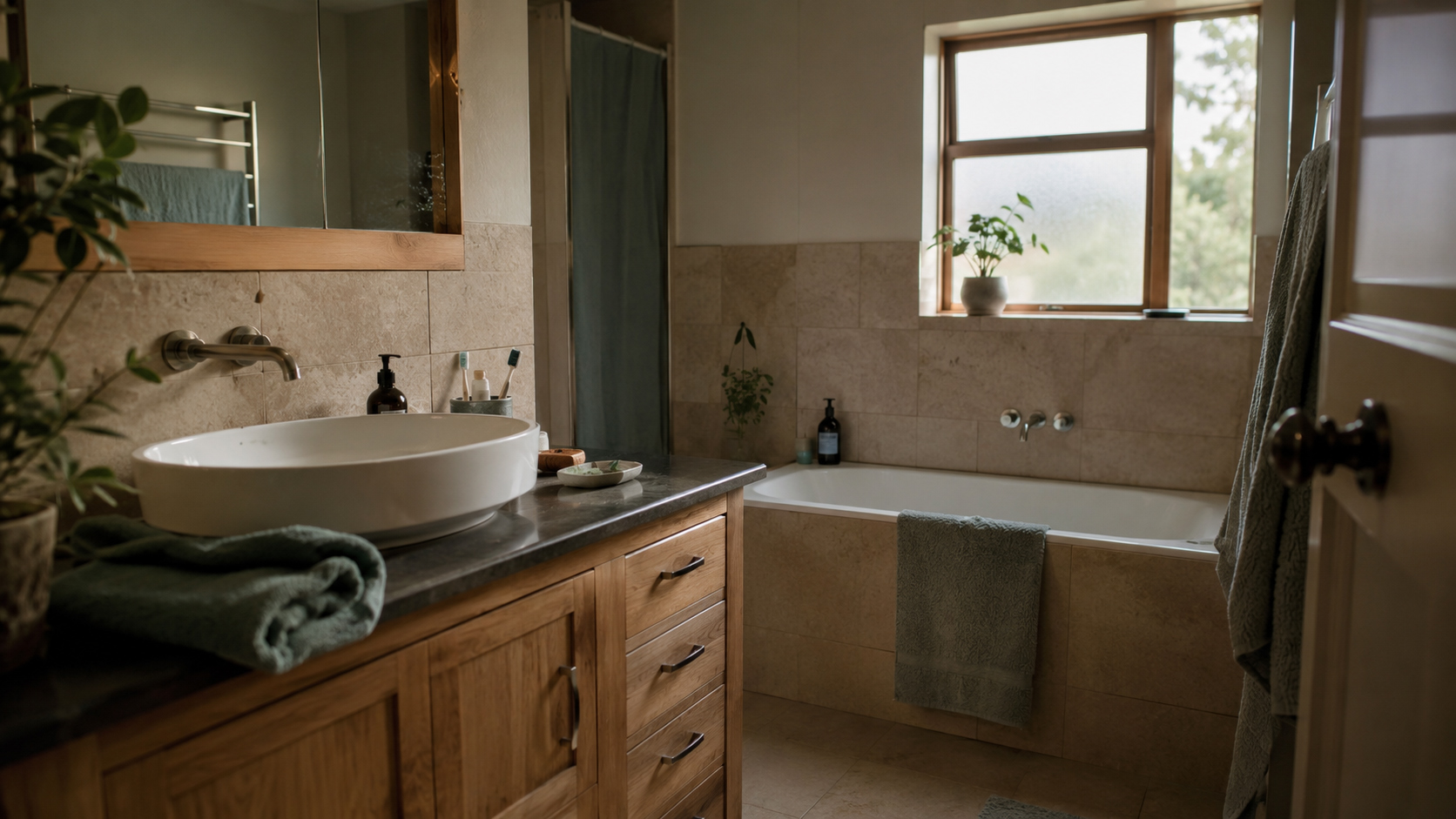
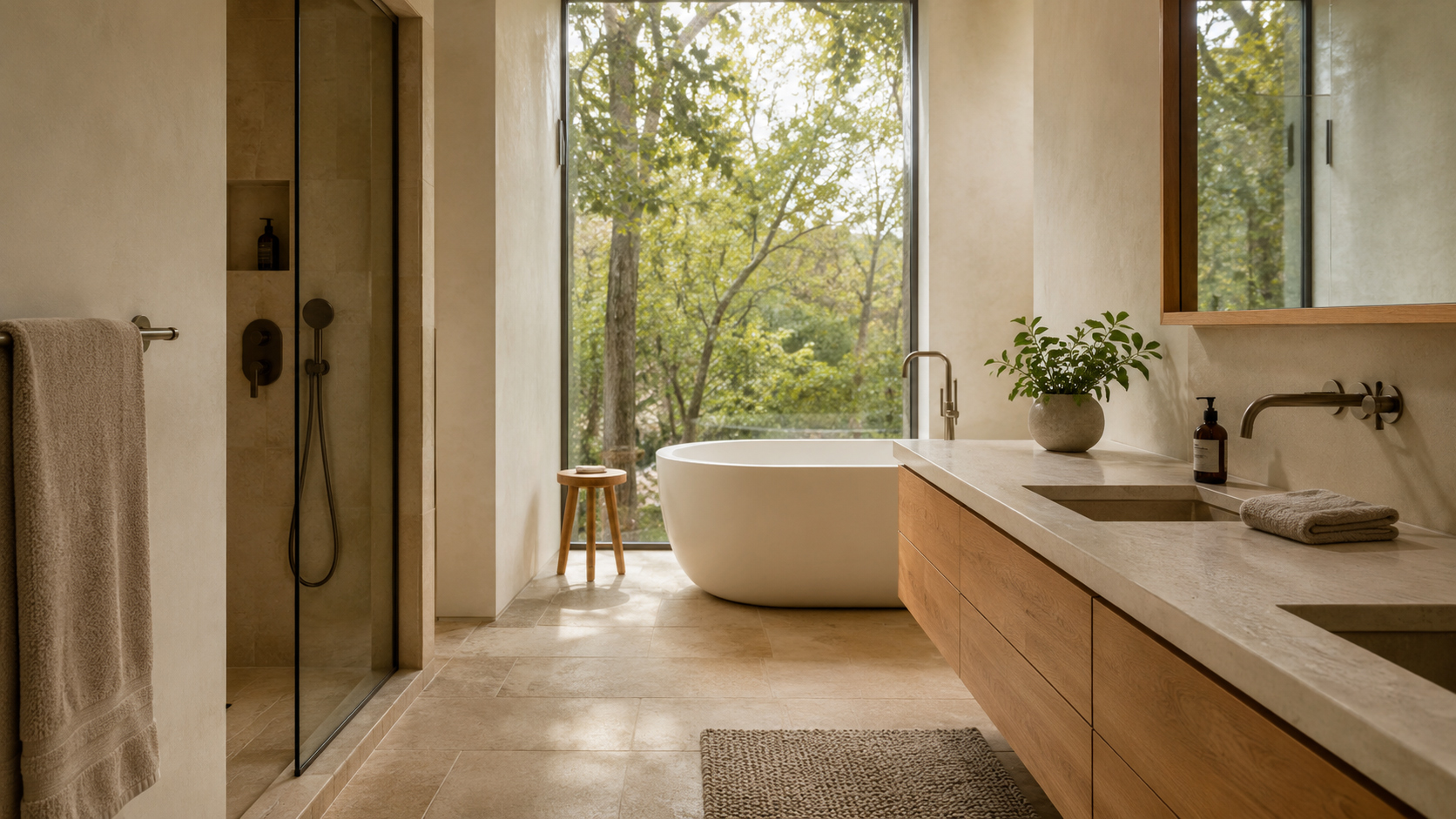
A bathroom is often the smallest room in a home.
It is rarely the first space people show visitors.
It is not usually where families gather.
It does not have the social importance of a kitchen, the comfort of a living room, or the visual impact of an entrance.
And yet, few rooms reveal more about how people live.
Behind a closed bathroom door, many of the expectations, anxieties and values of modern life become visible.
How do we care for ourselves?
How do we understand comfort?
How do we respond to ageing?
How much technology do we want inside our private spaces?
How do we balance convenience with simplicity?
How do we create homes that support not only our present lives, but our future selves?
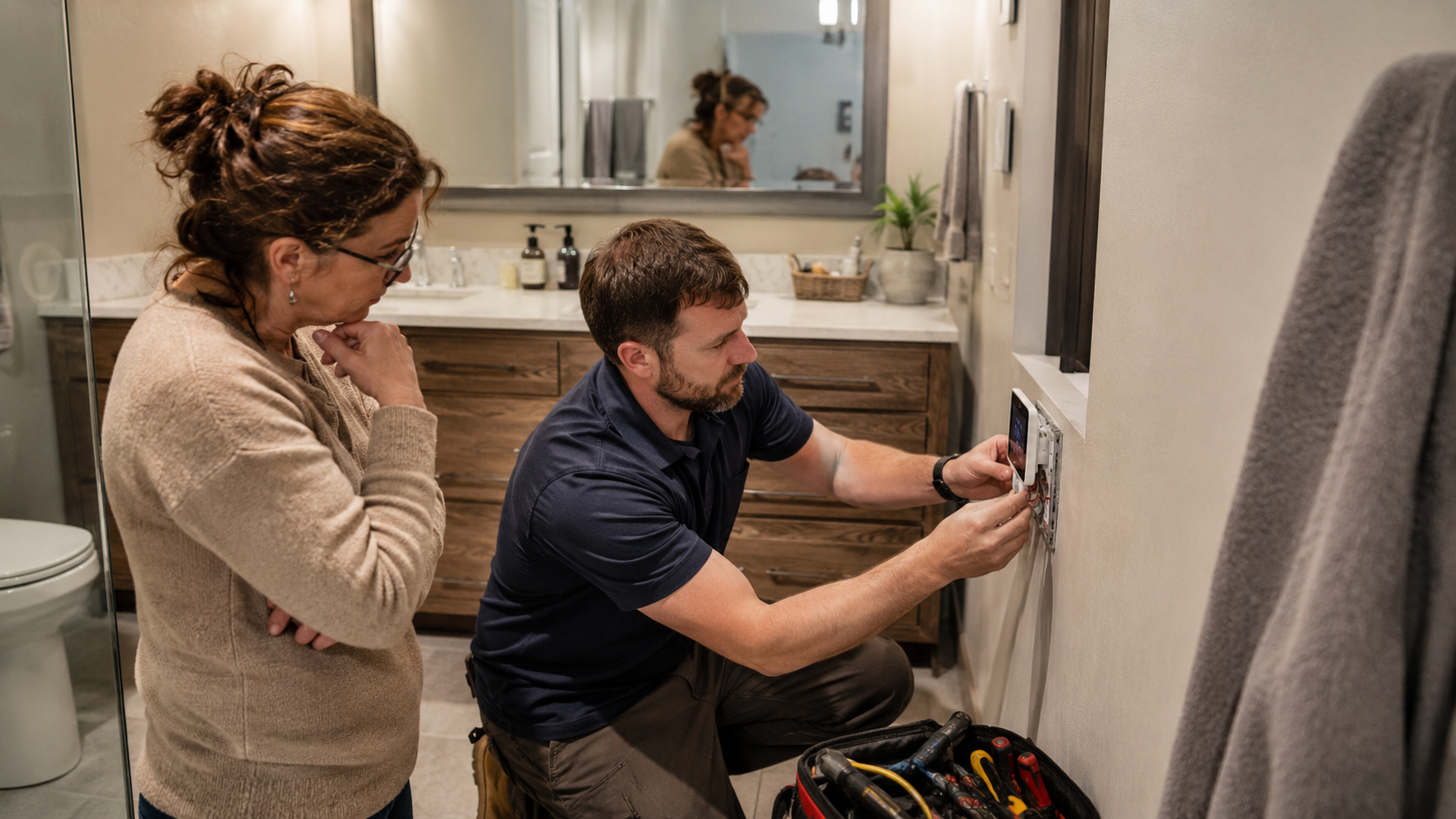
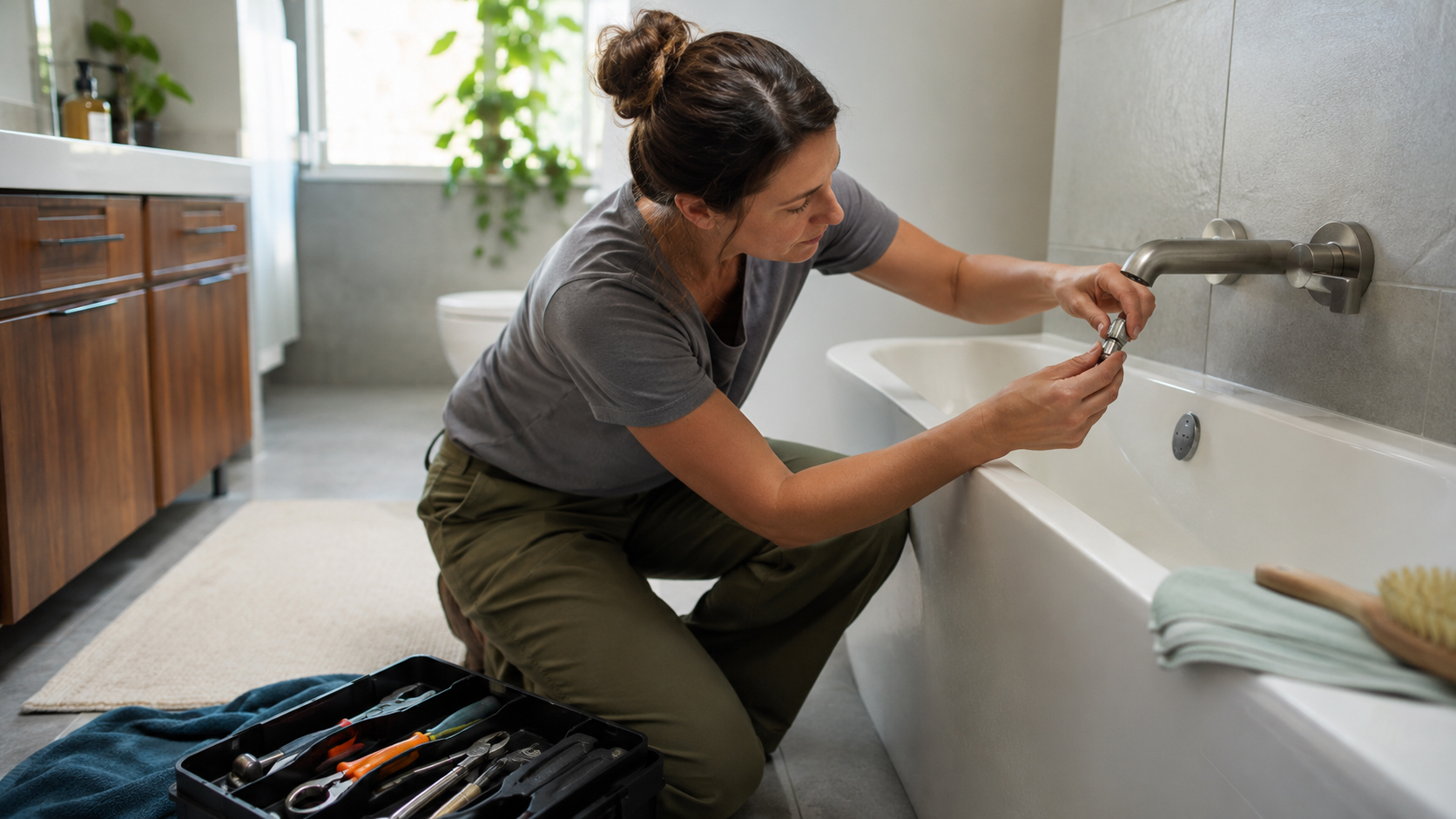
Supporting a home over decades requires not only good design, but also ongoing maintenance, adaptation and informed decision-making.
This question connects strongly with the wider principles of designing adaptable and resilient homes in New Zealand, where long-term comfort depends on thoughtful planning, maintenance and understanding how homes change over time.
These questions may appear too large for such a small room.
But that is exactly why the bathroom matters.
Throughout this book, these questions will be explored through the relationship between design thinking, everyday behaviour, climate conditions and practical decision-making.
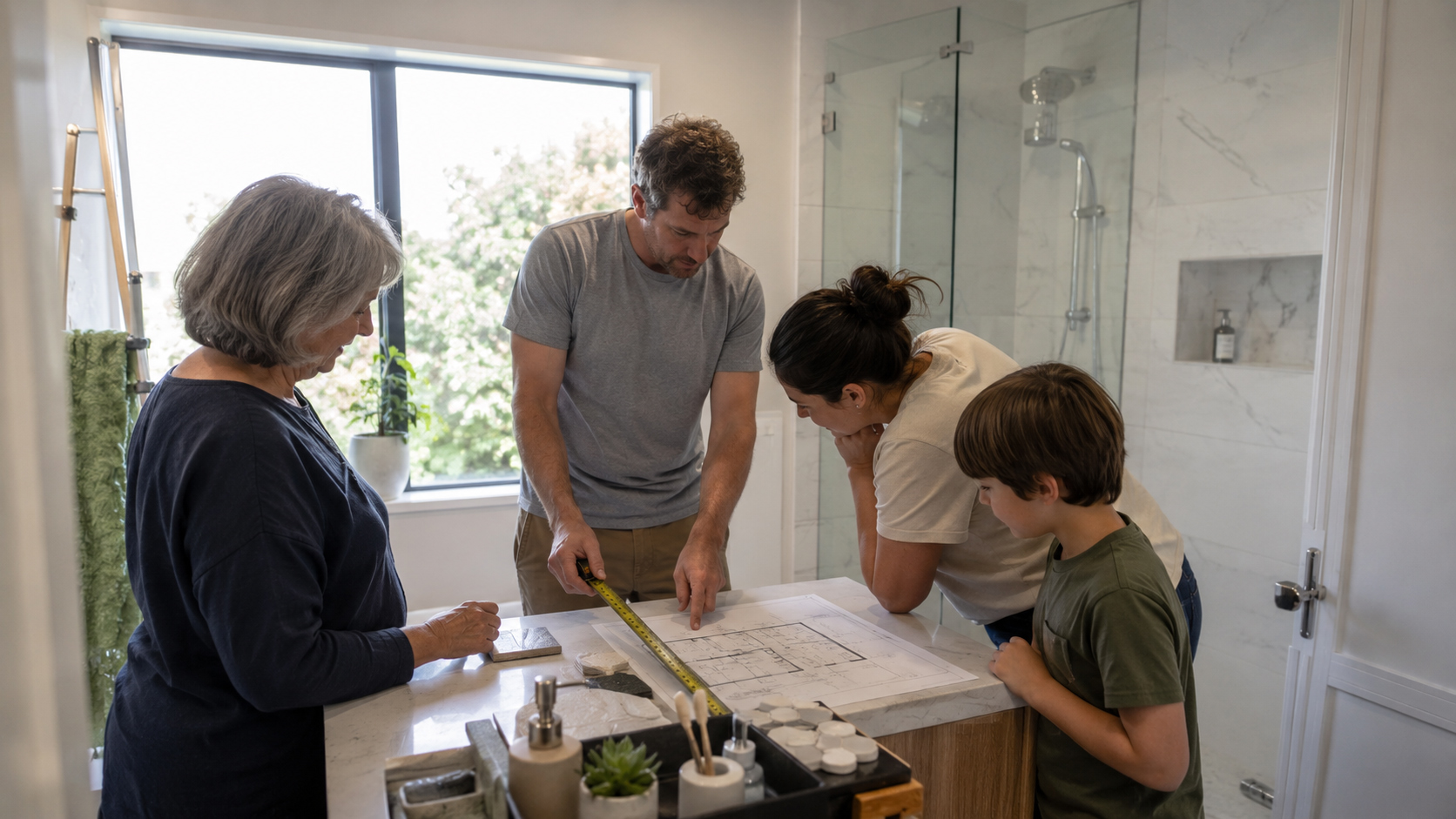
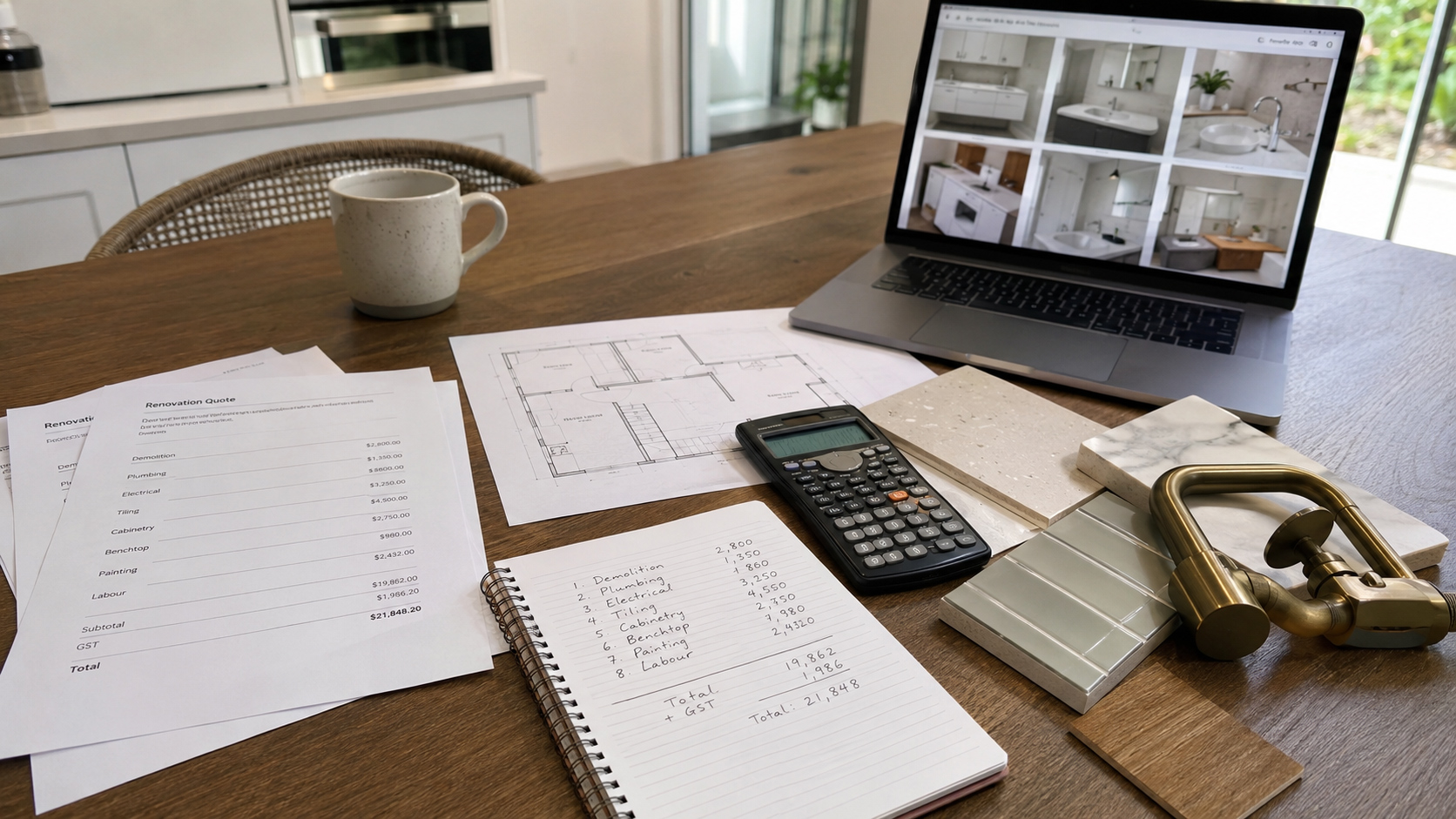
For homeowners planning a renovation, these ideas can be translated into measurable actions through bathroom planning principles, renovation checklists and decision frameworks.
Beyond Function
For a long time, the bathroom was understood mainly through function.
It was a place for hygiene.
A place where water entered and left.
A place where practical decisions mattered more than emotional ones.
The success of a bathroom was measured by simple questions:
Did it work?
Was it clean?
Was it easy to maintain?
But homes change because people change.
Today, homeowners expect more from the spaces they live in.
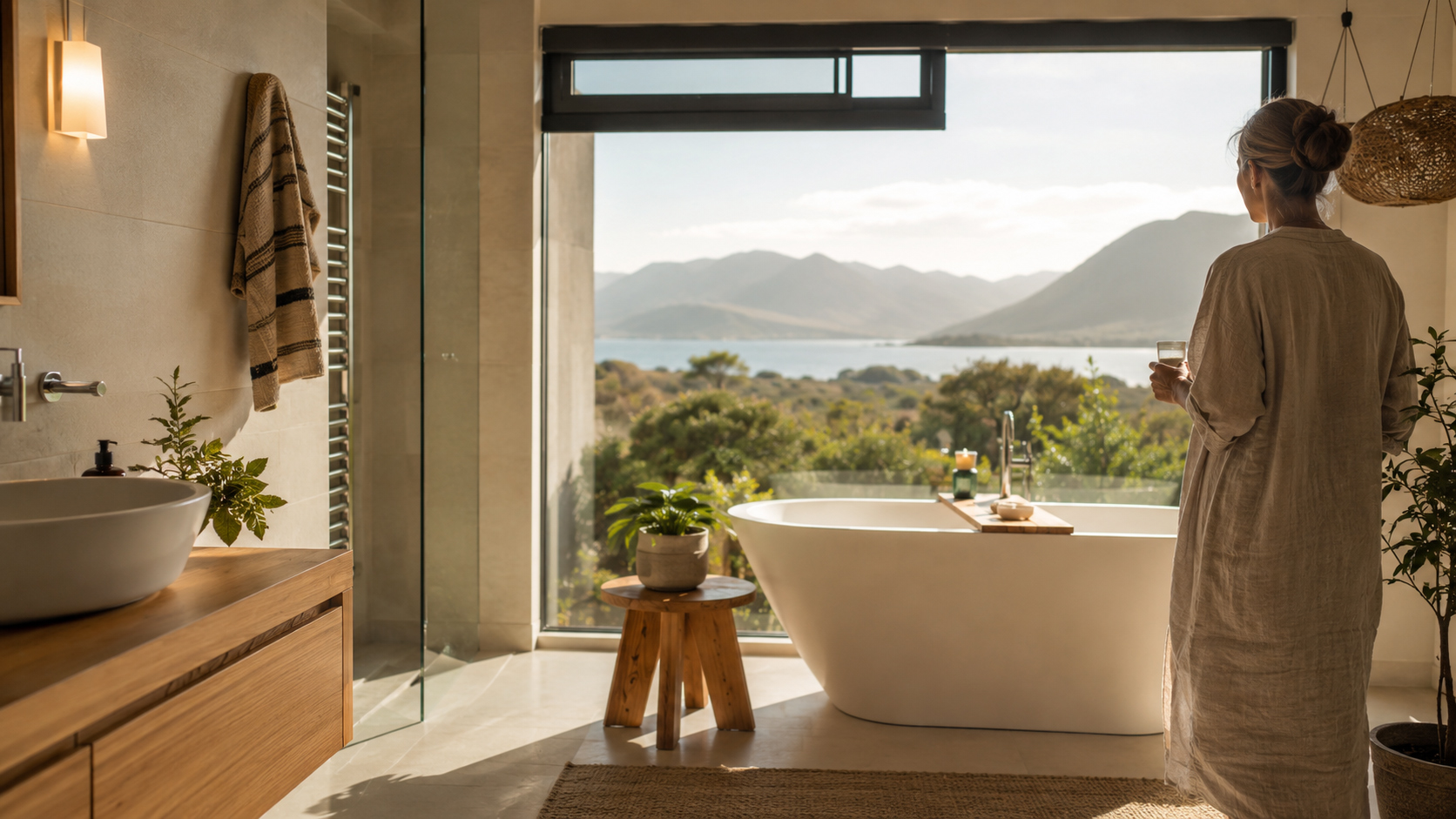
A bathroom is no longer only where the body is cleaned.
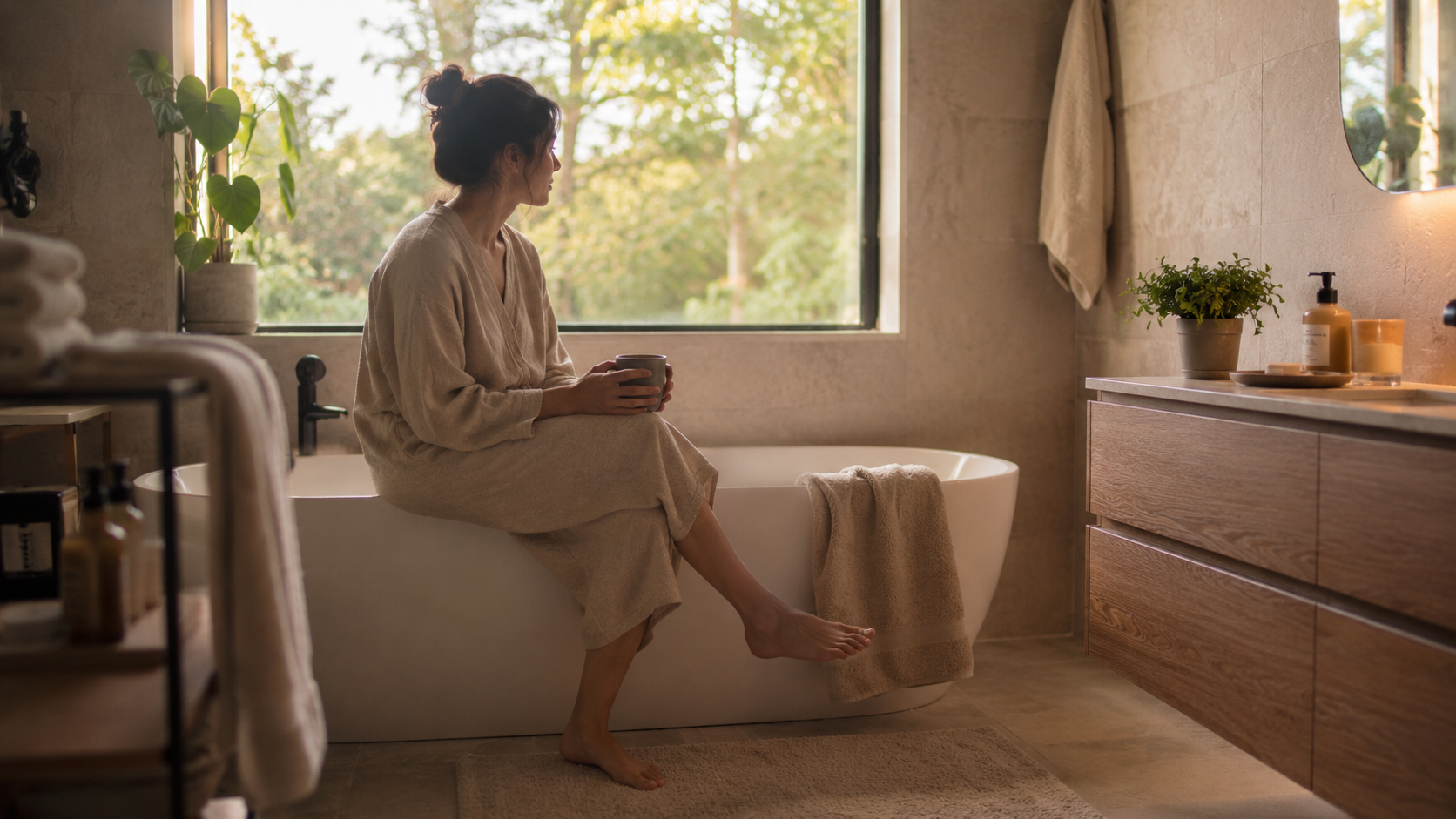
It has become a place where people recover.
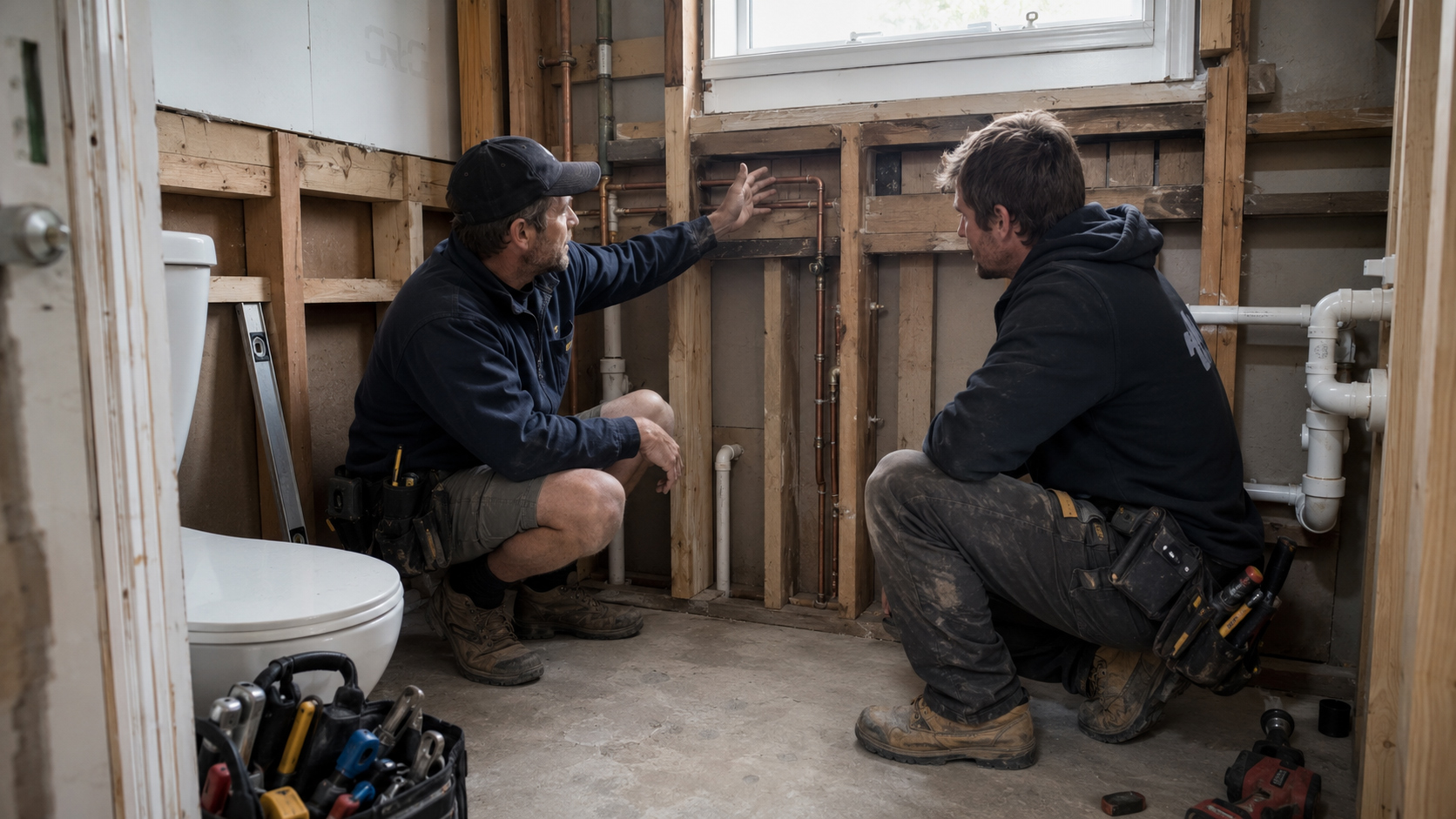
For homeowners planning a renovation, these ideas connect with practical decisions about layout, products, budgeting and installation planning. See our practical guide to creating functional kitchen and bathroom spaces in New Zealand homes.
Where they slow down.
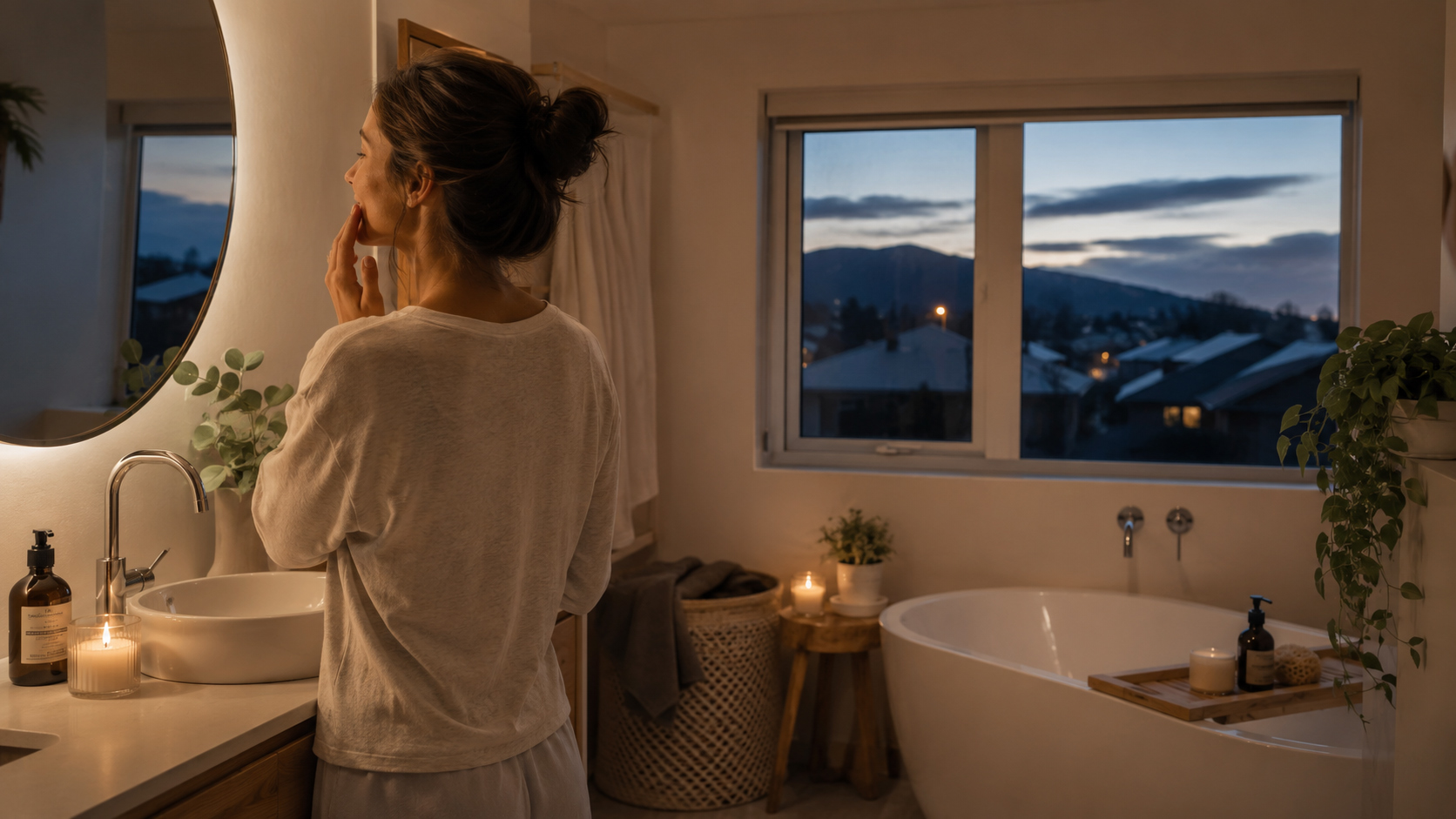
Where they prepare for the day.
Where they create moments of privacy in increasingly connected and demanding lives.
The modern bathroom sits somewhere between necessity and emotion.
It is both practical and personal.
Technical and human.
Private and deeply connected to the way society understands wellbeing.
A Mirror of Everyday Life
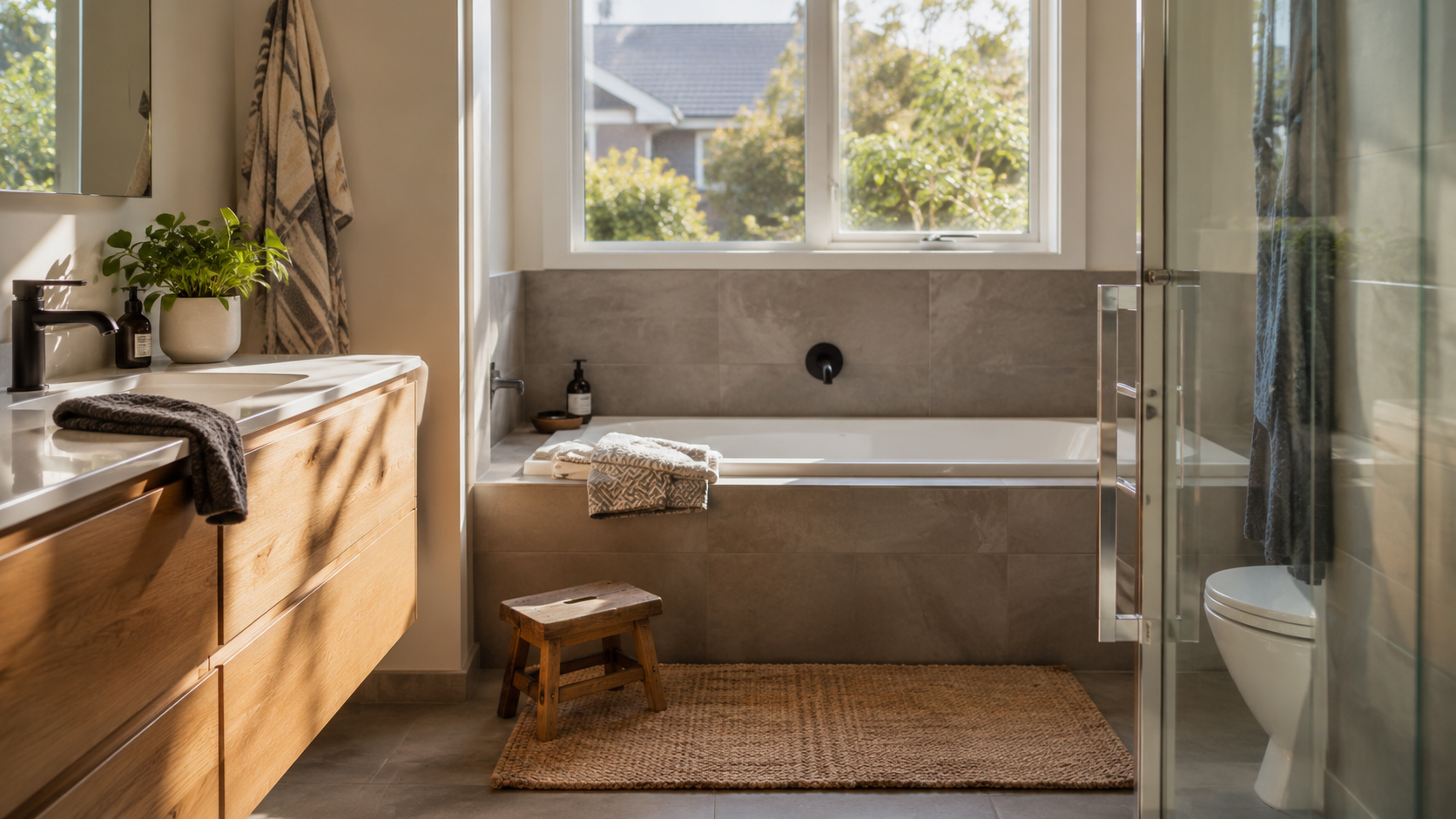
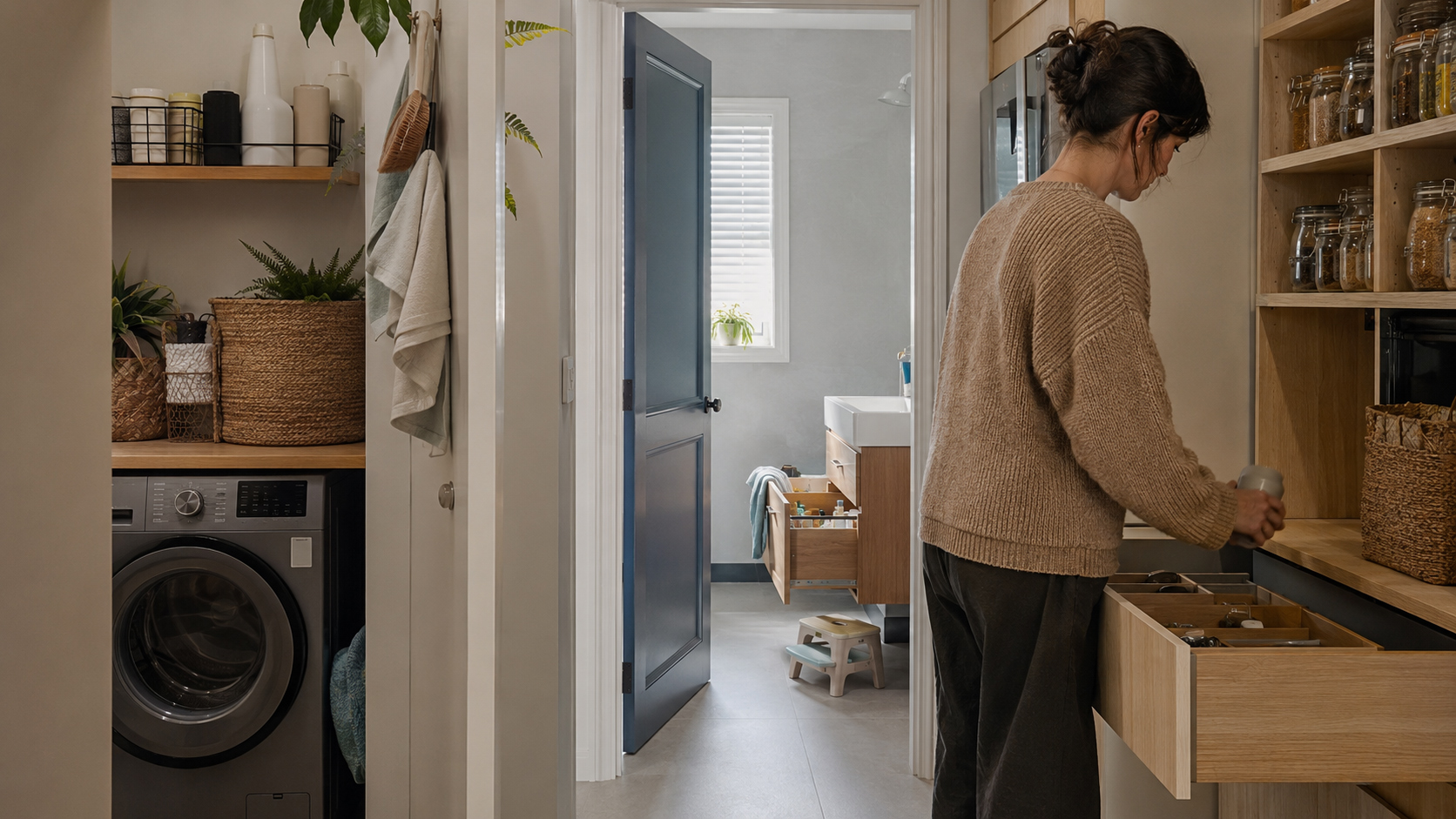
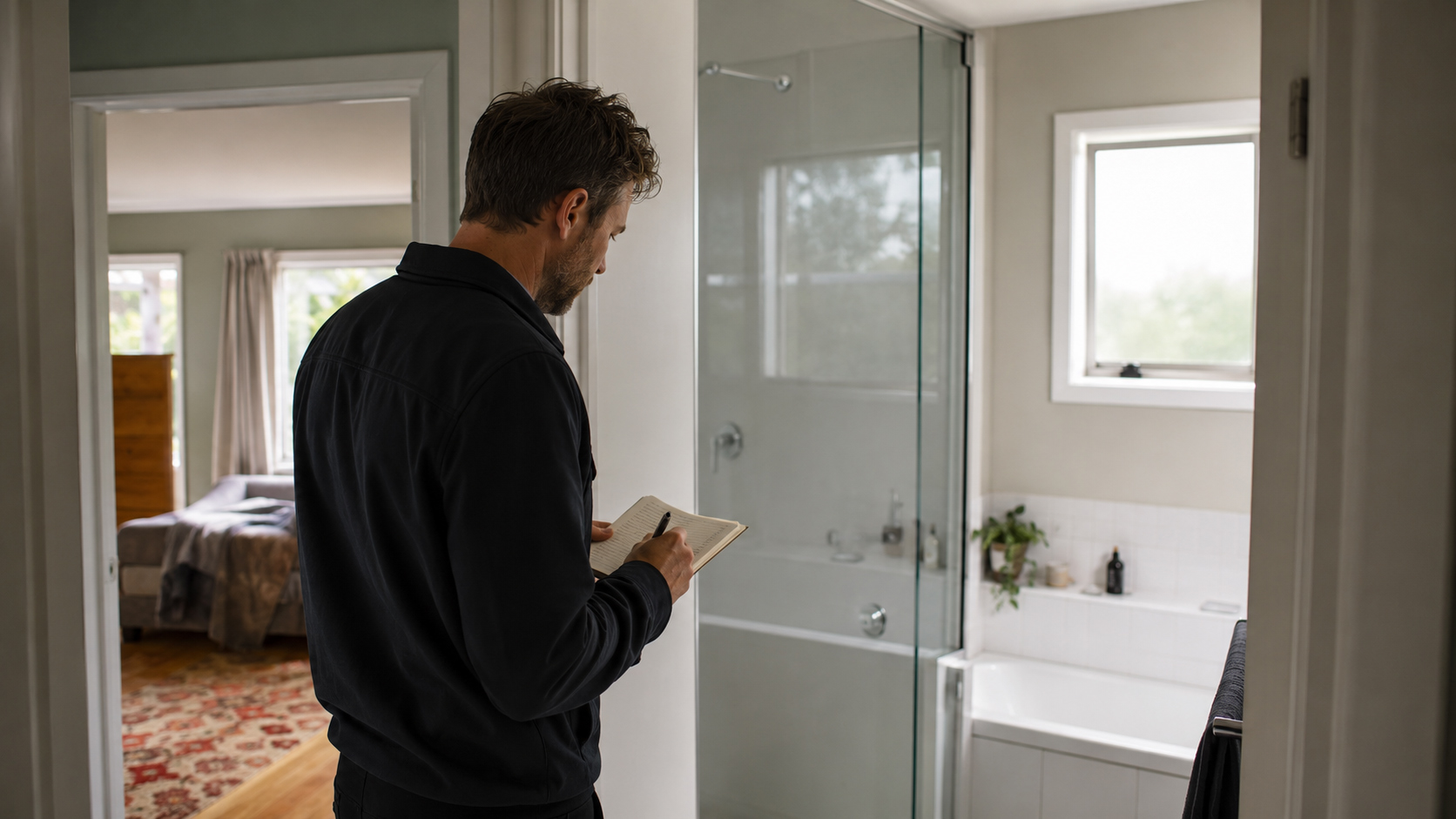
The bathroom is interesting because it records ordinary life.
Not extraordinary moments.
Ordinary ones.
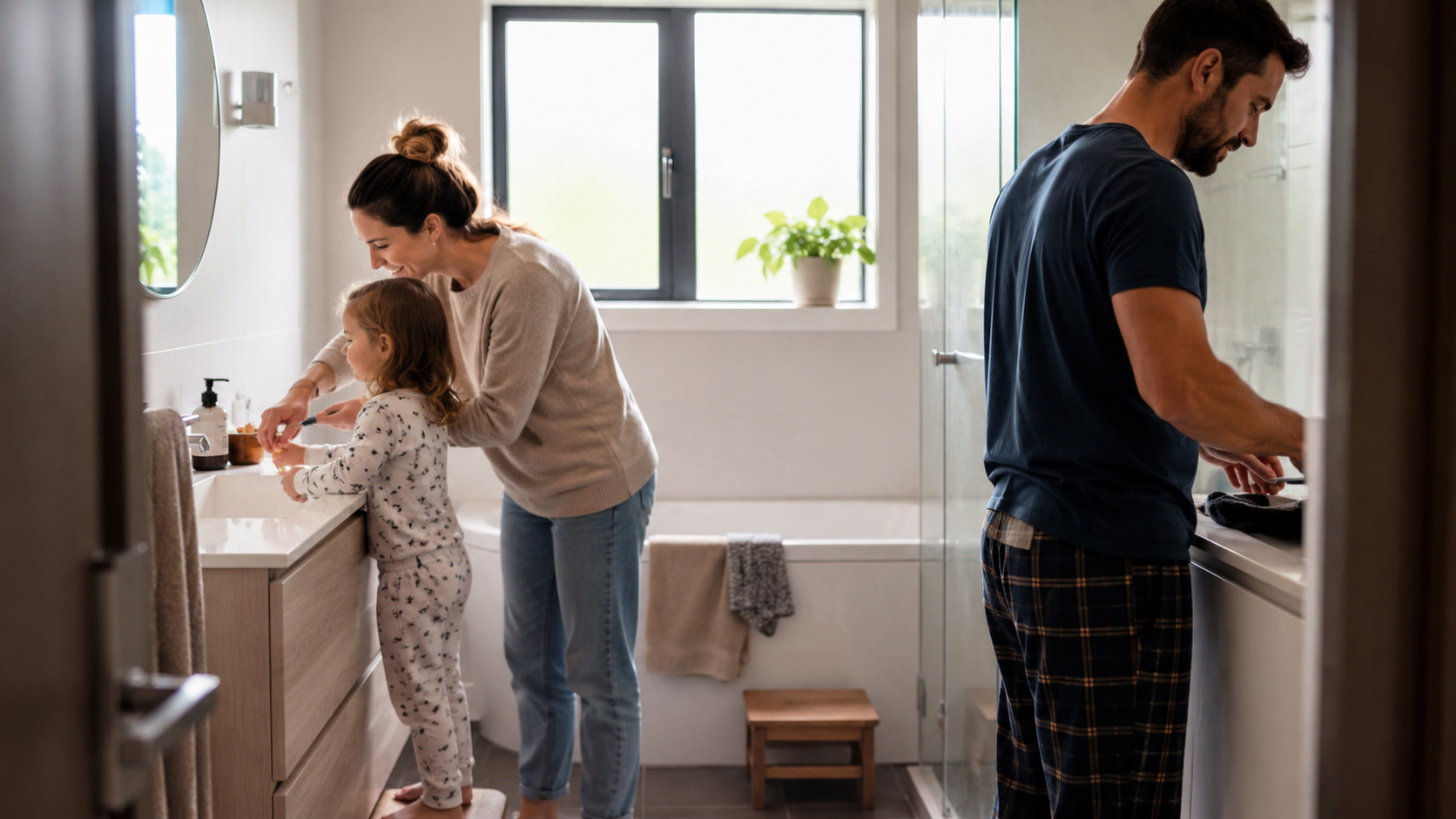
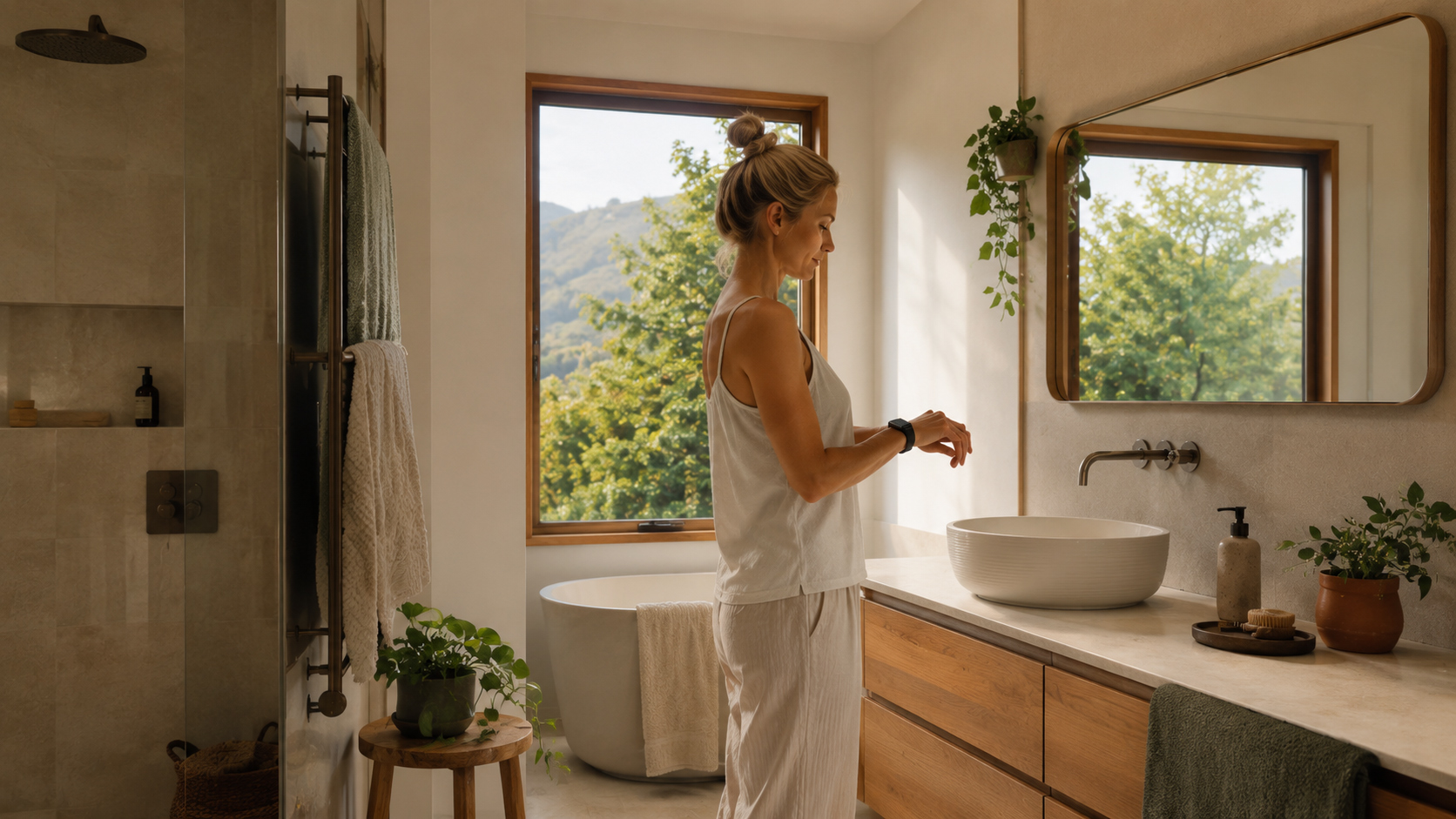
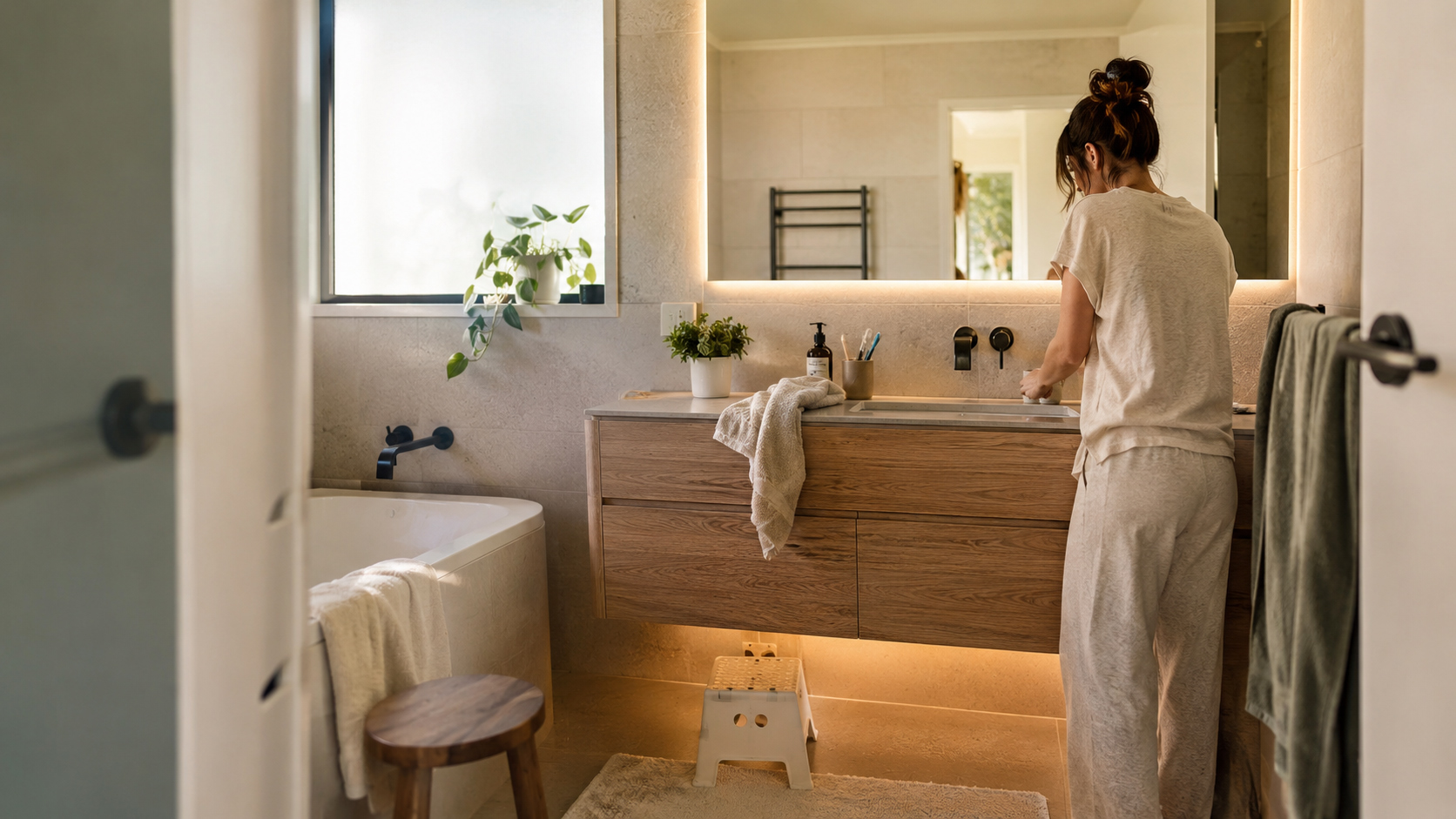
The morning routine before work.
The tired shower after a long day.
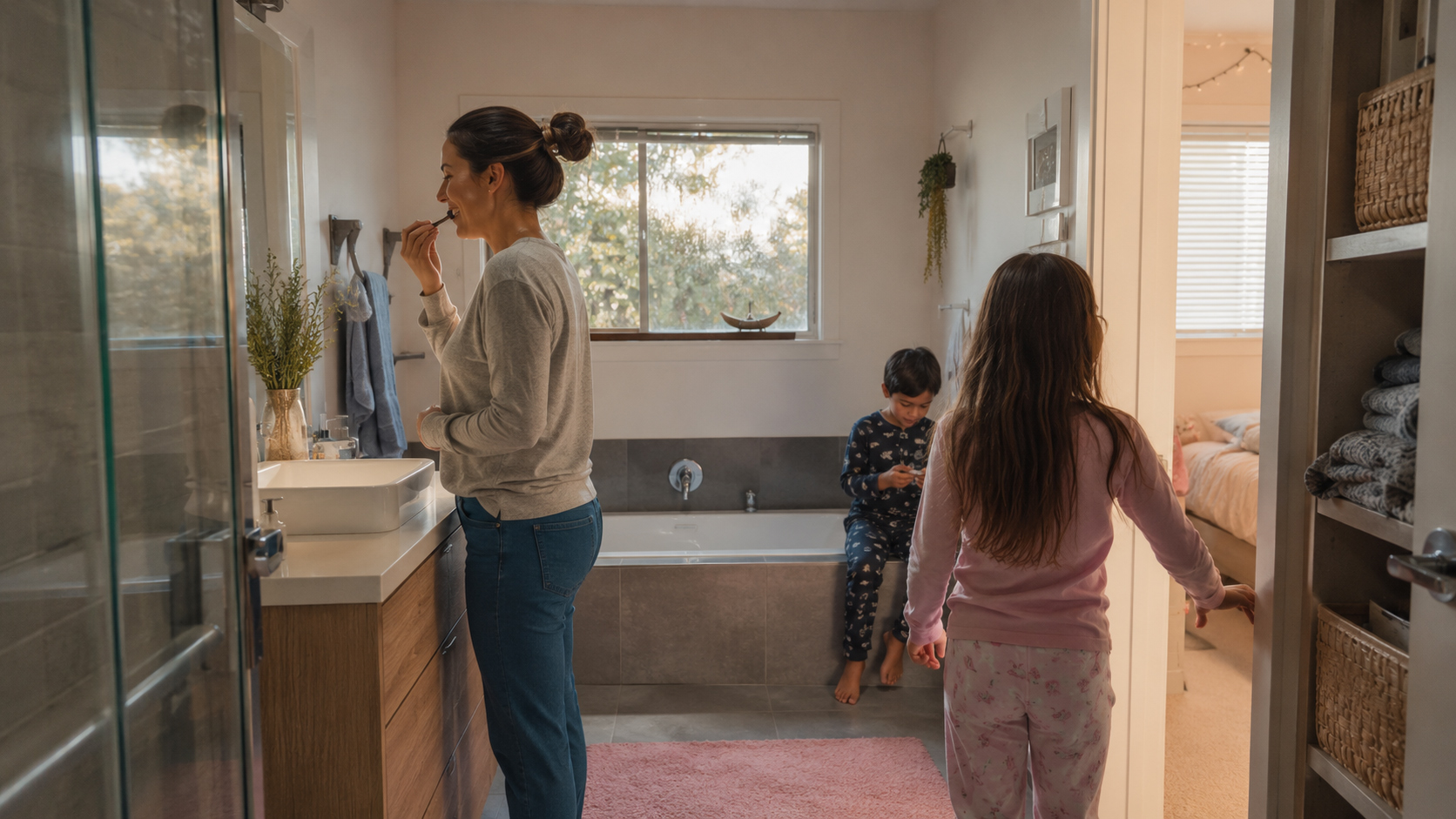
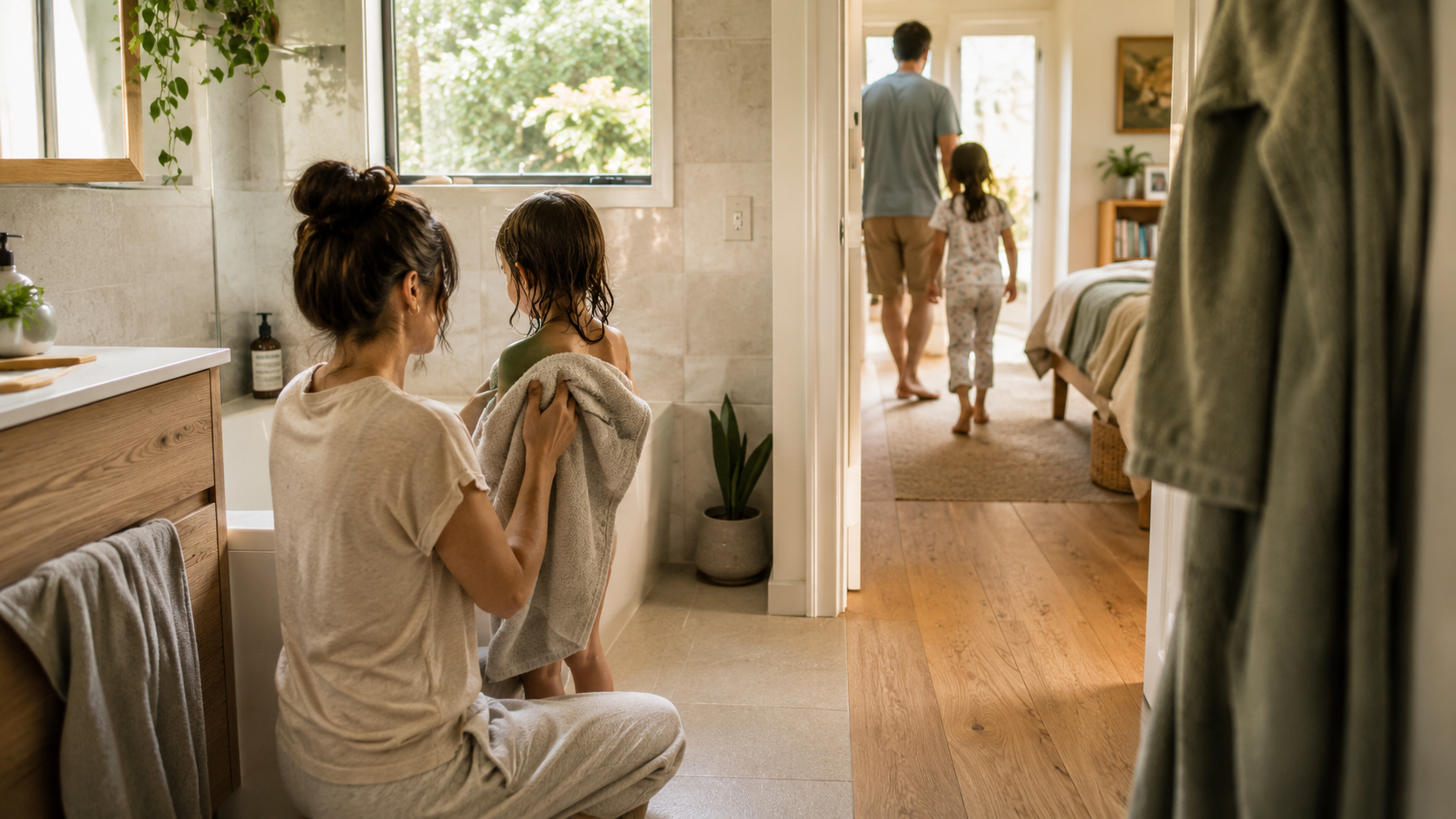
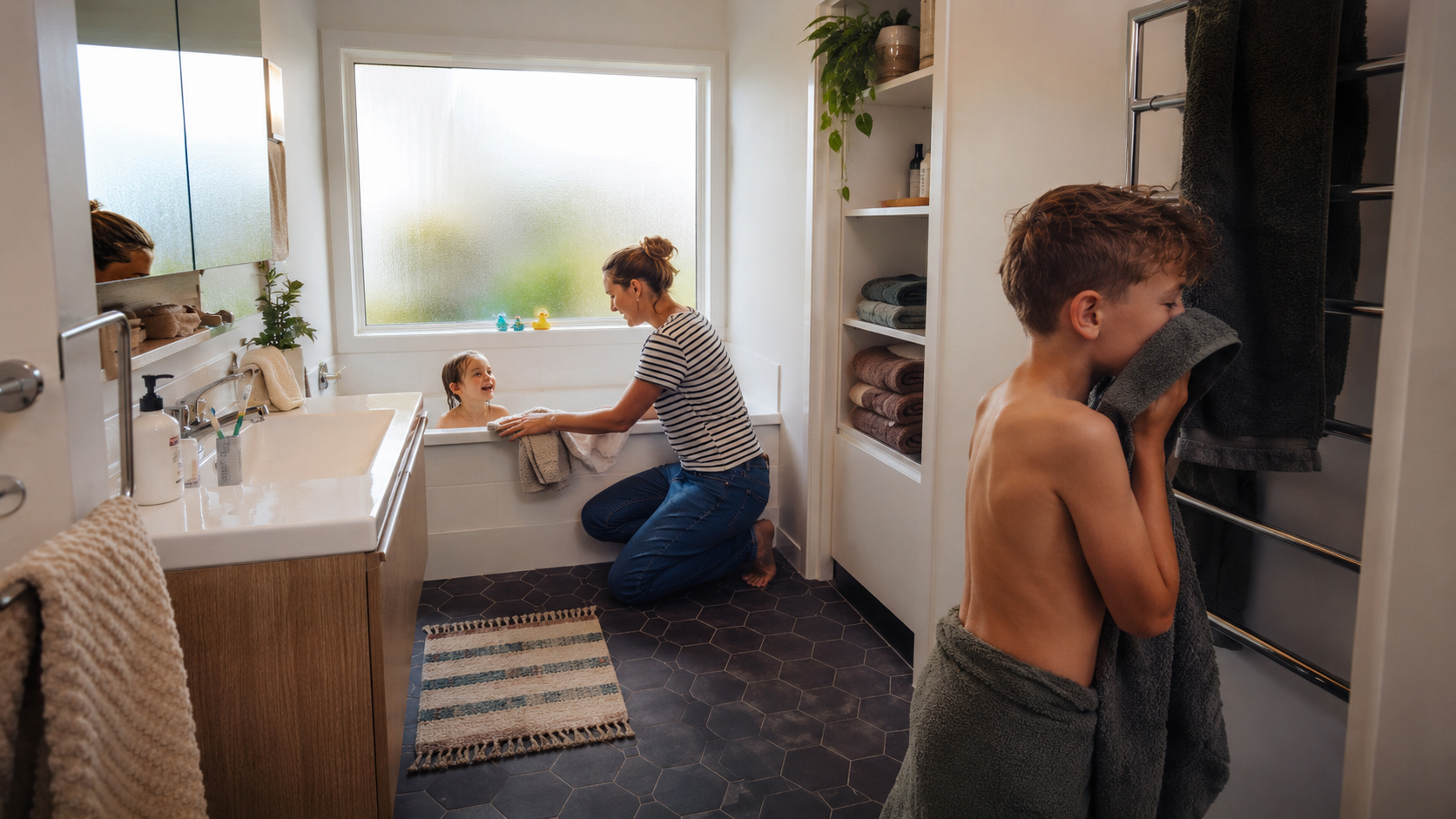
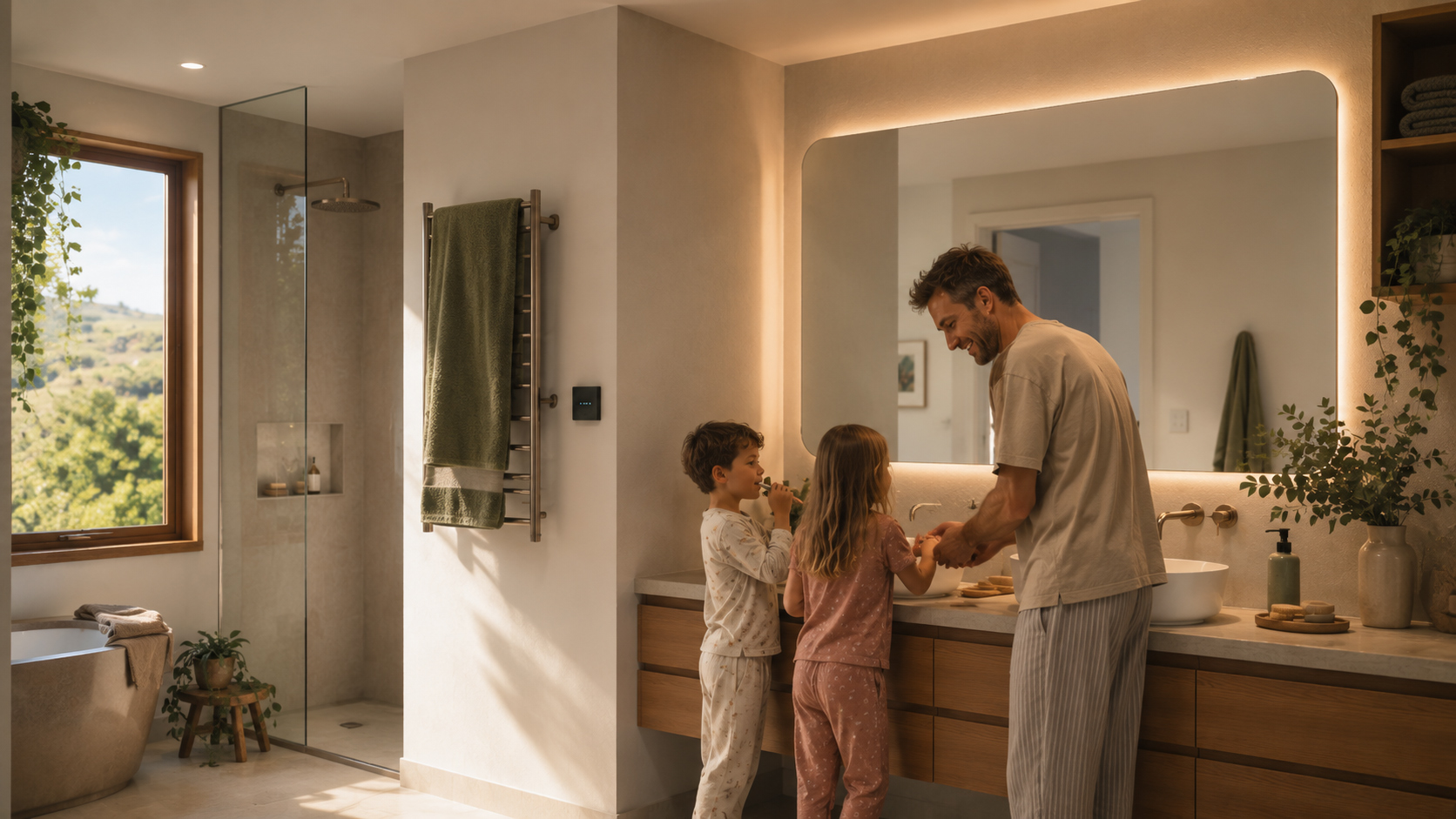
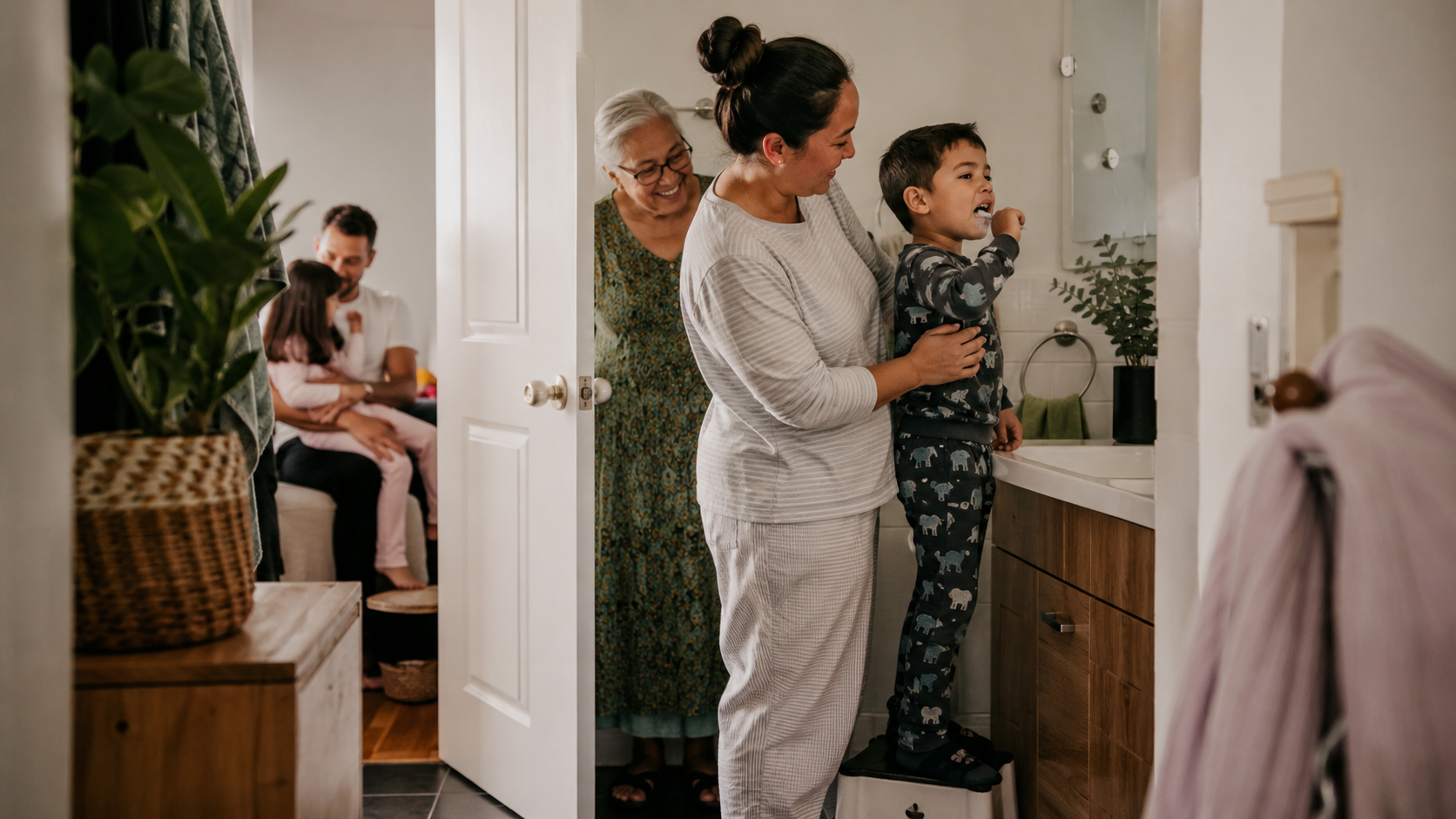
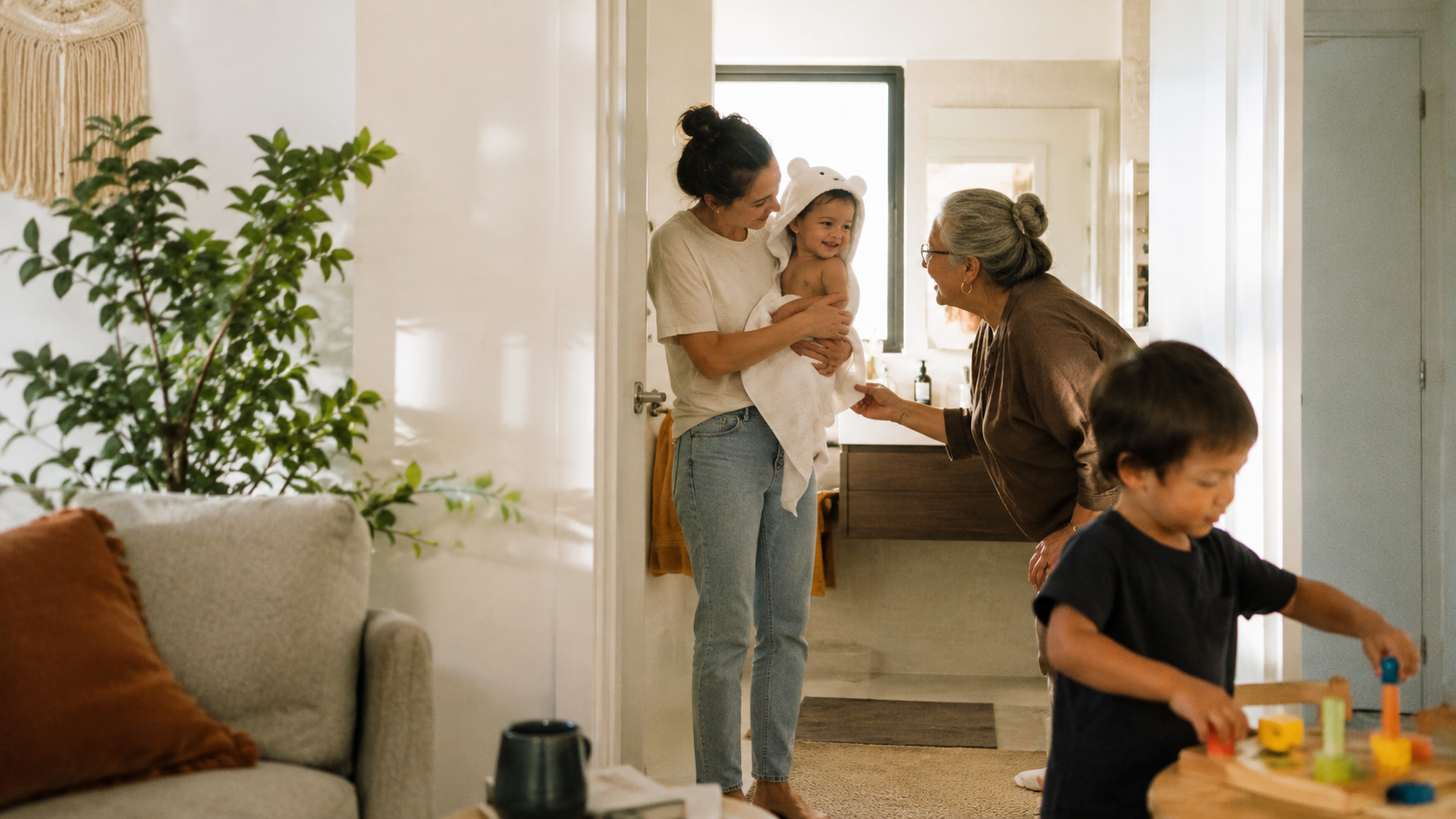
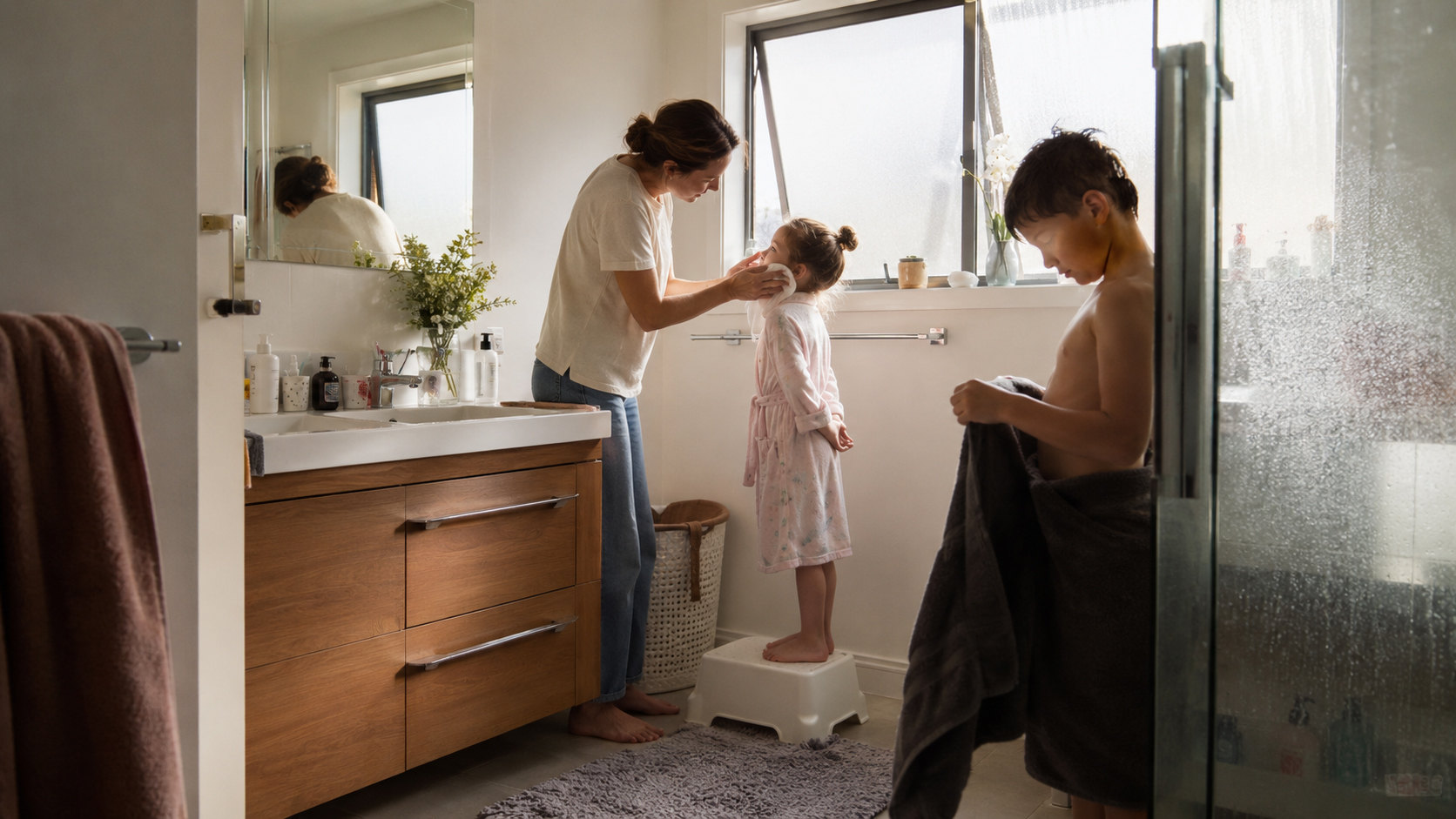
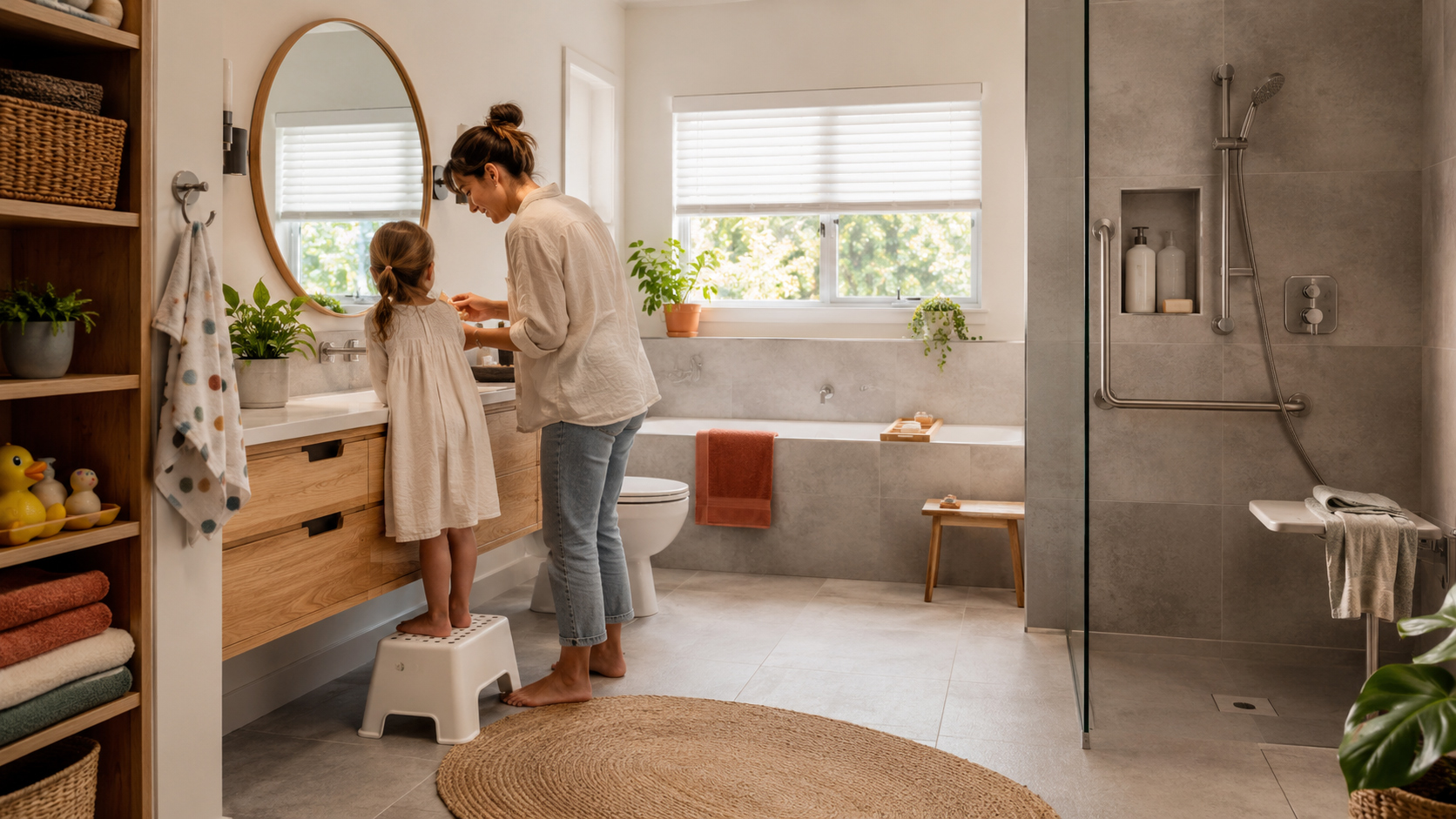
The parent helping a child prepare for school.
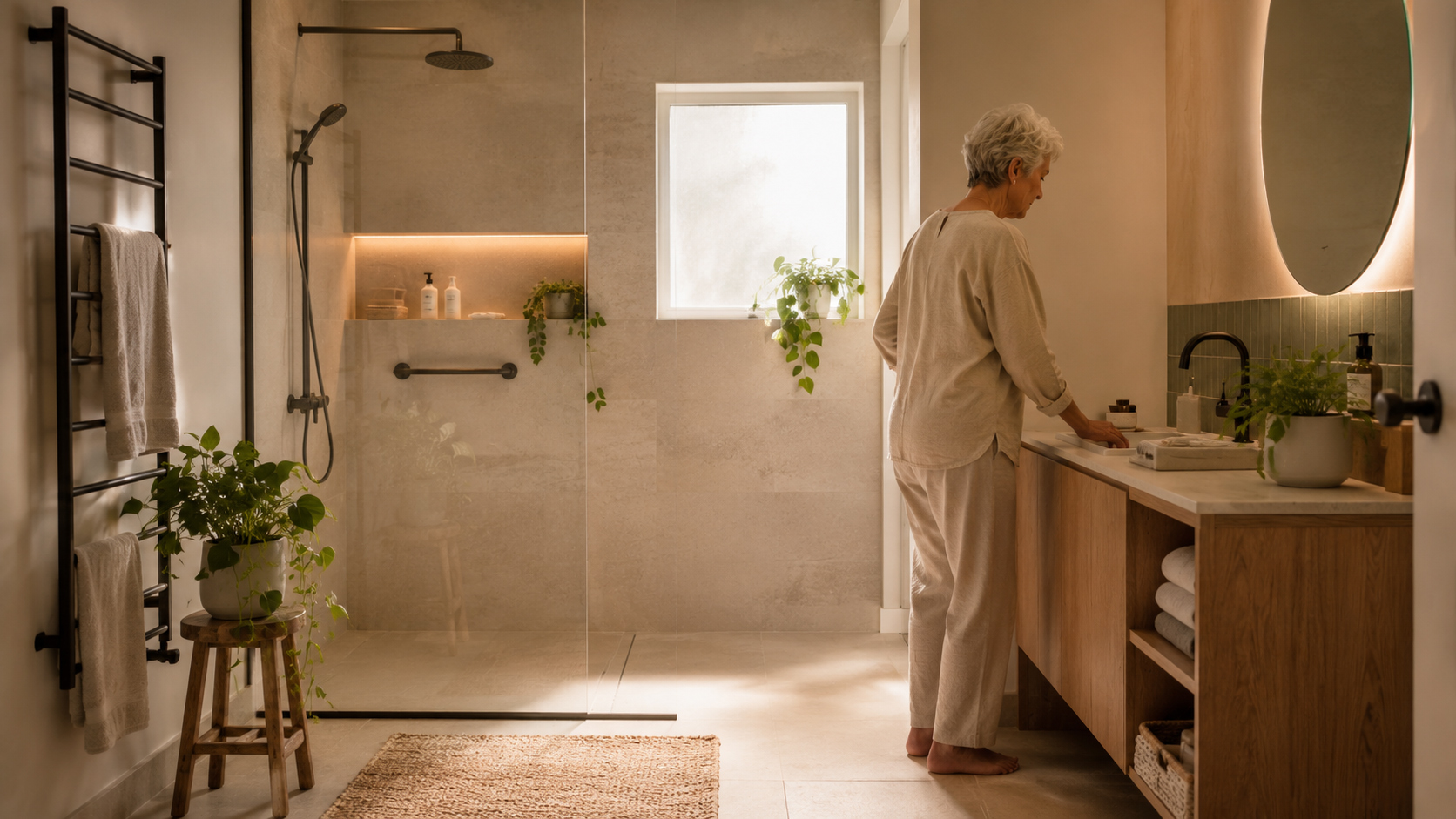
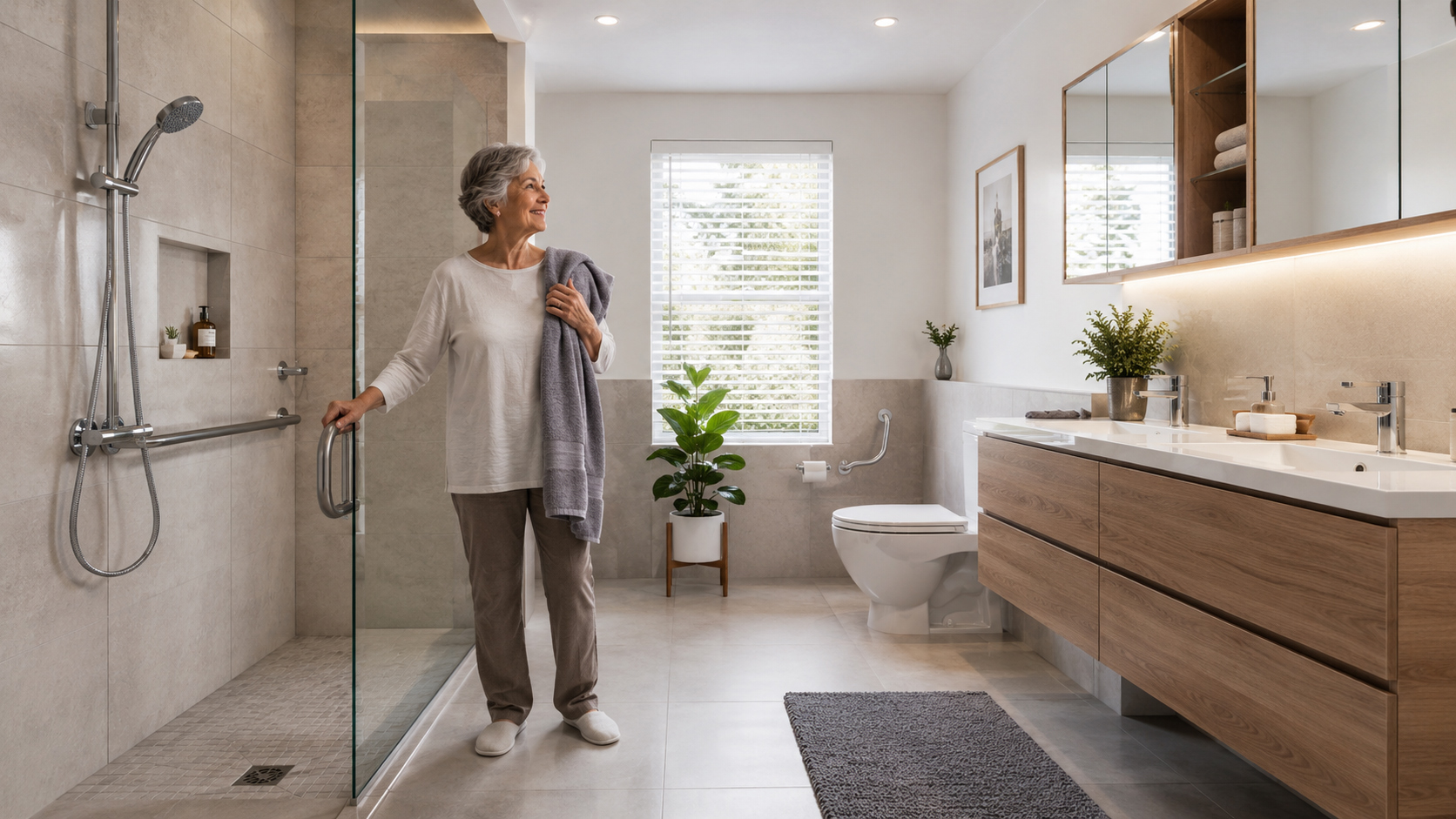
The older homeowner adapting a space for changing mobility.
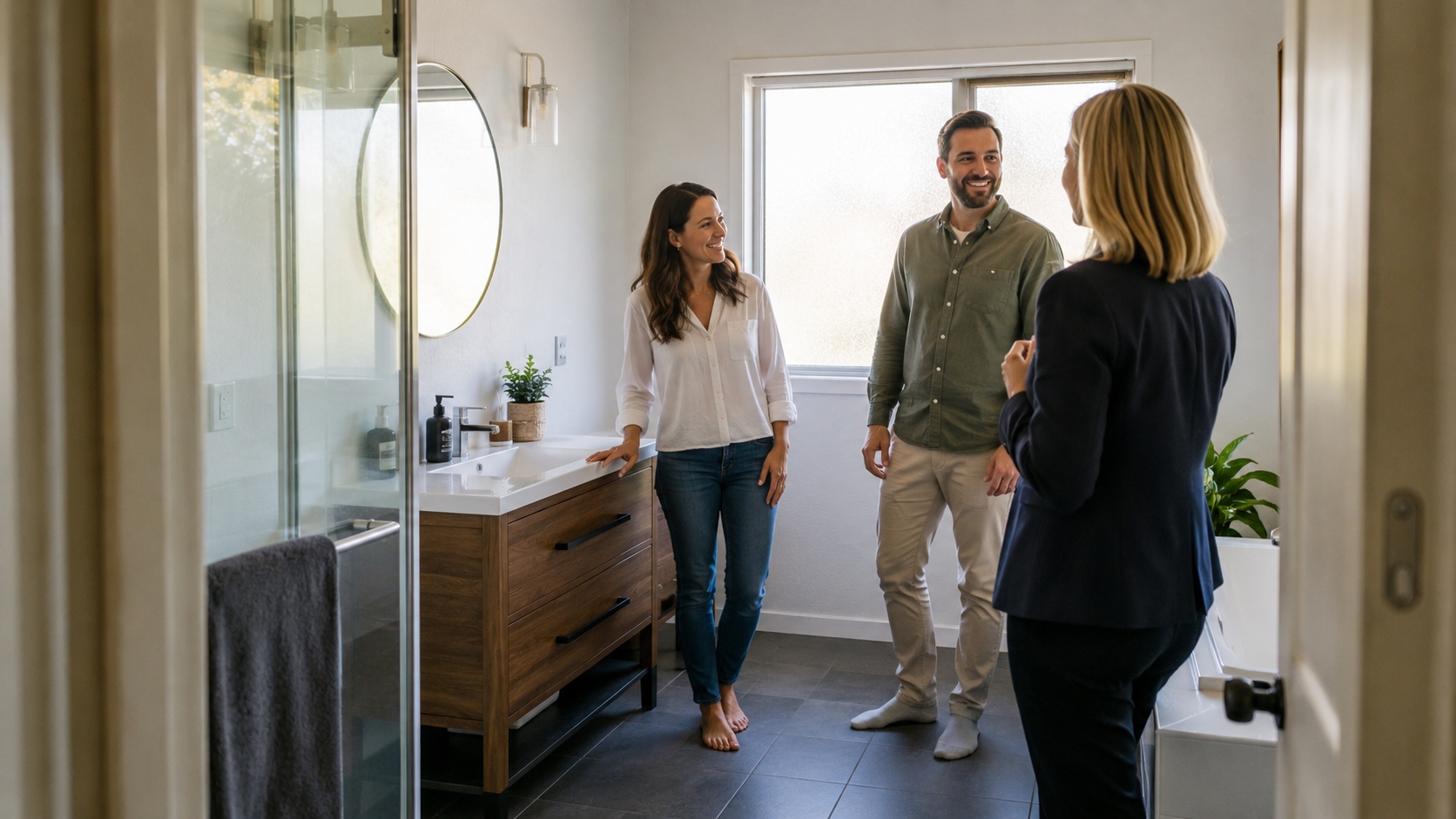
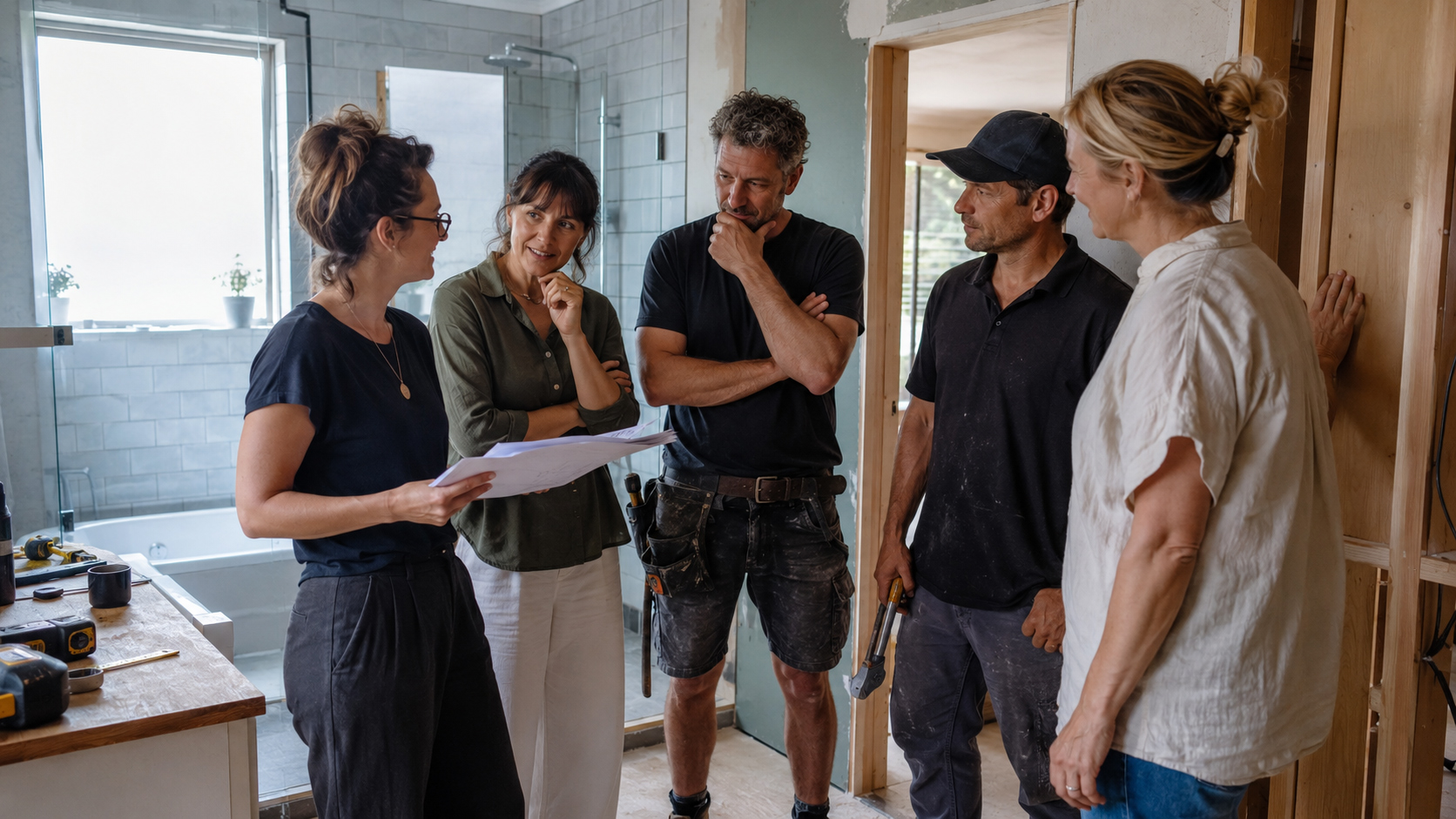
The couple deciding whether their home will support them for another twenty years.
These moments rarely appear in architectural photography.
They are not dramatic.
They are not designed for presentation.
But they are where homes are truly experienced.
A bathroom reveals whether a house understands the people living inside it.
Why New Zealand?
Every country has bathrooms.
But every country creates different relationships with them.
New Zealand provides a particularly interesting context.
Its homes are shaped by:
a changing climate,
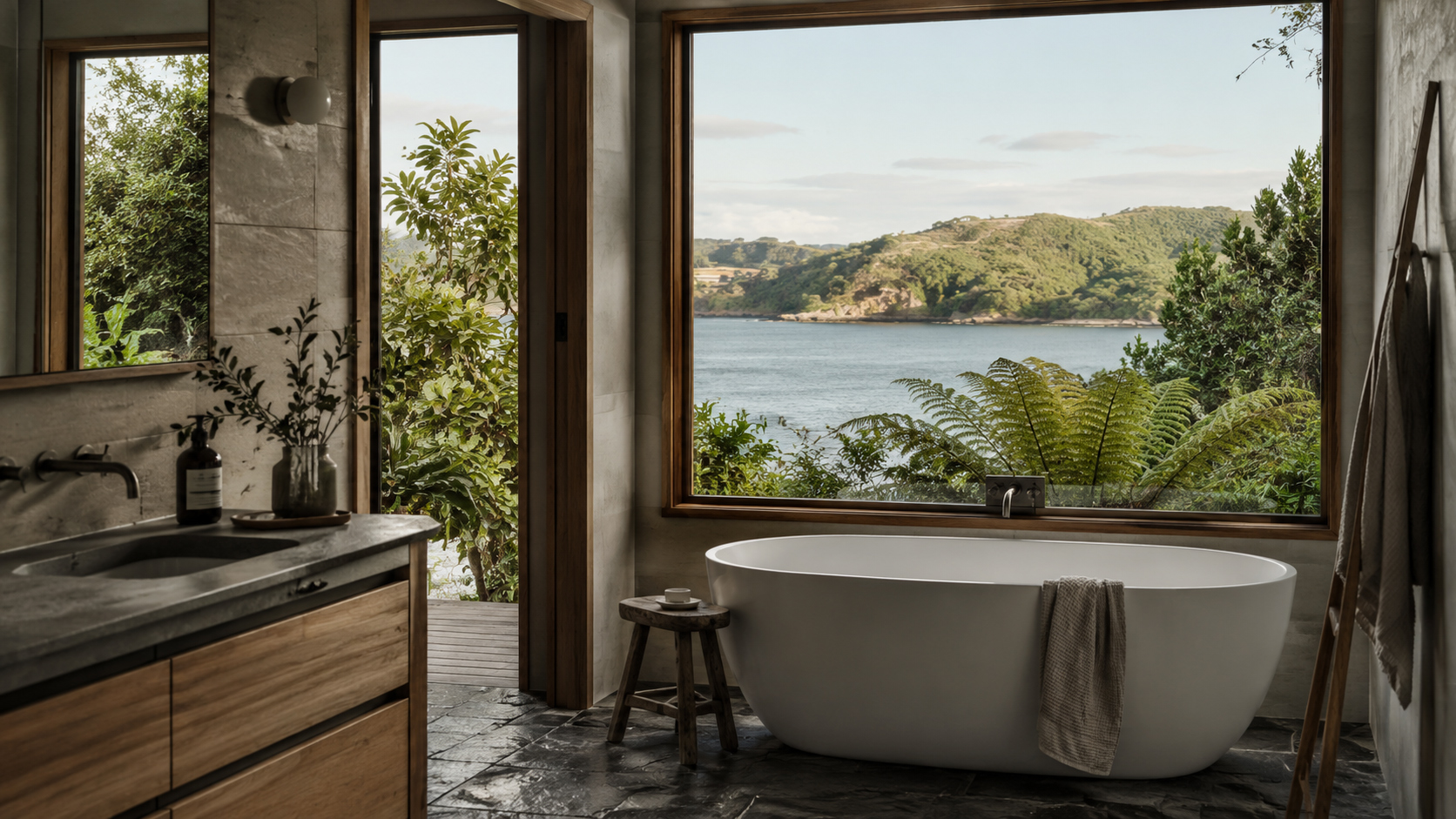
strong connections with nature,
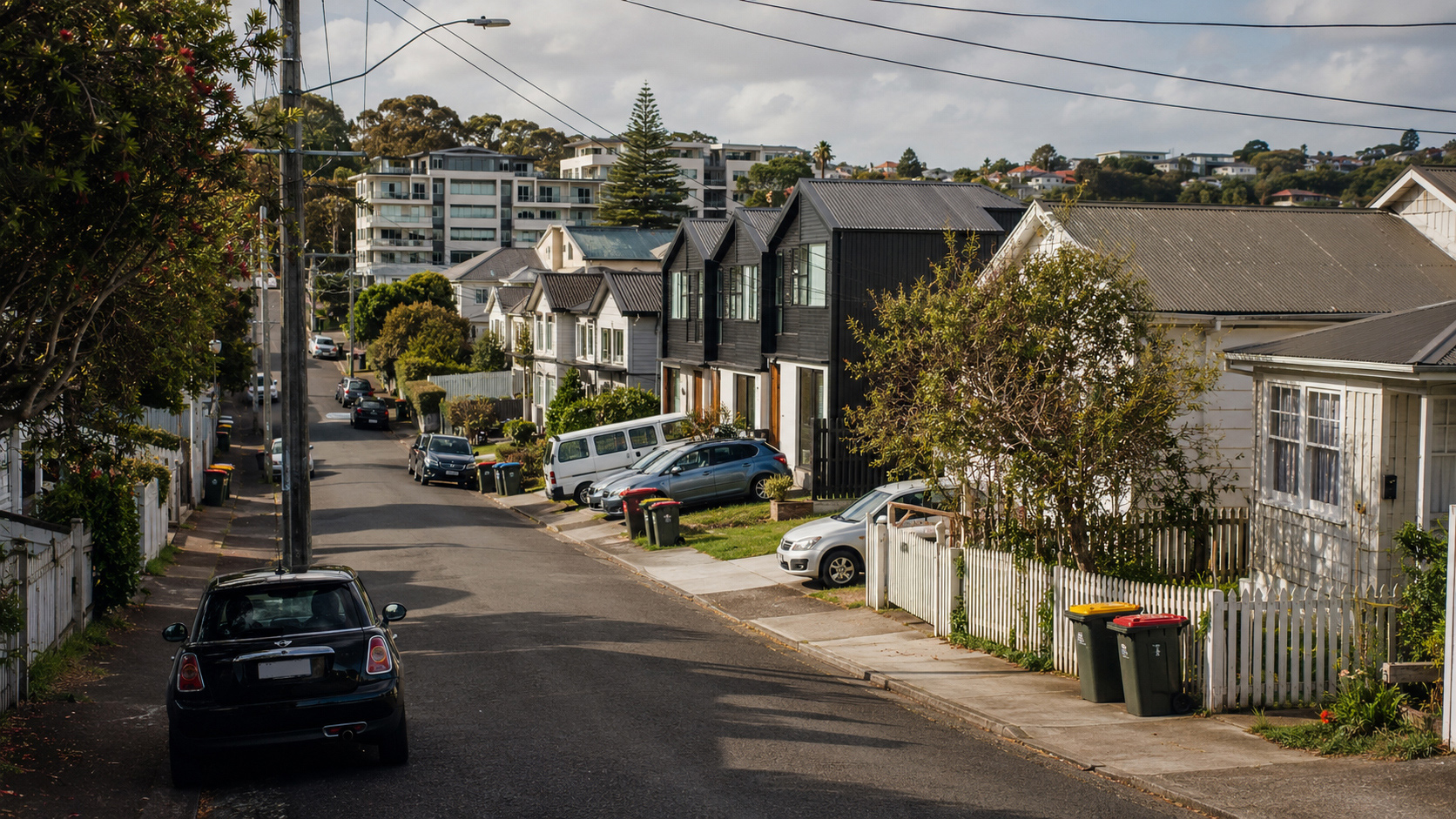
These ideas reflect a wider New Zealand approach to residential design, where climate, landscape and human wellbeing influence how homes are created.
a history of different cultural influences,
a practical approach to everyday living,
and a growing conversation about sustainability and wellbeing.
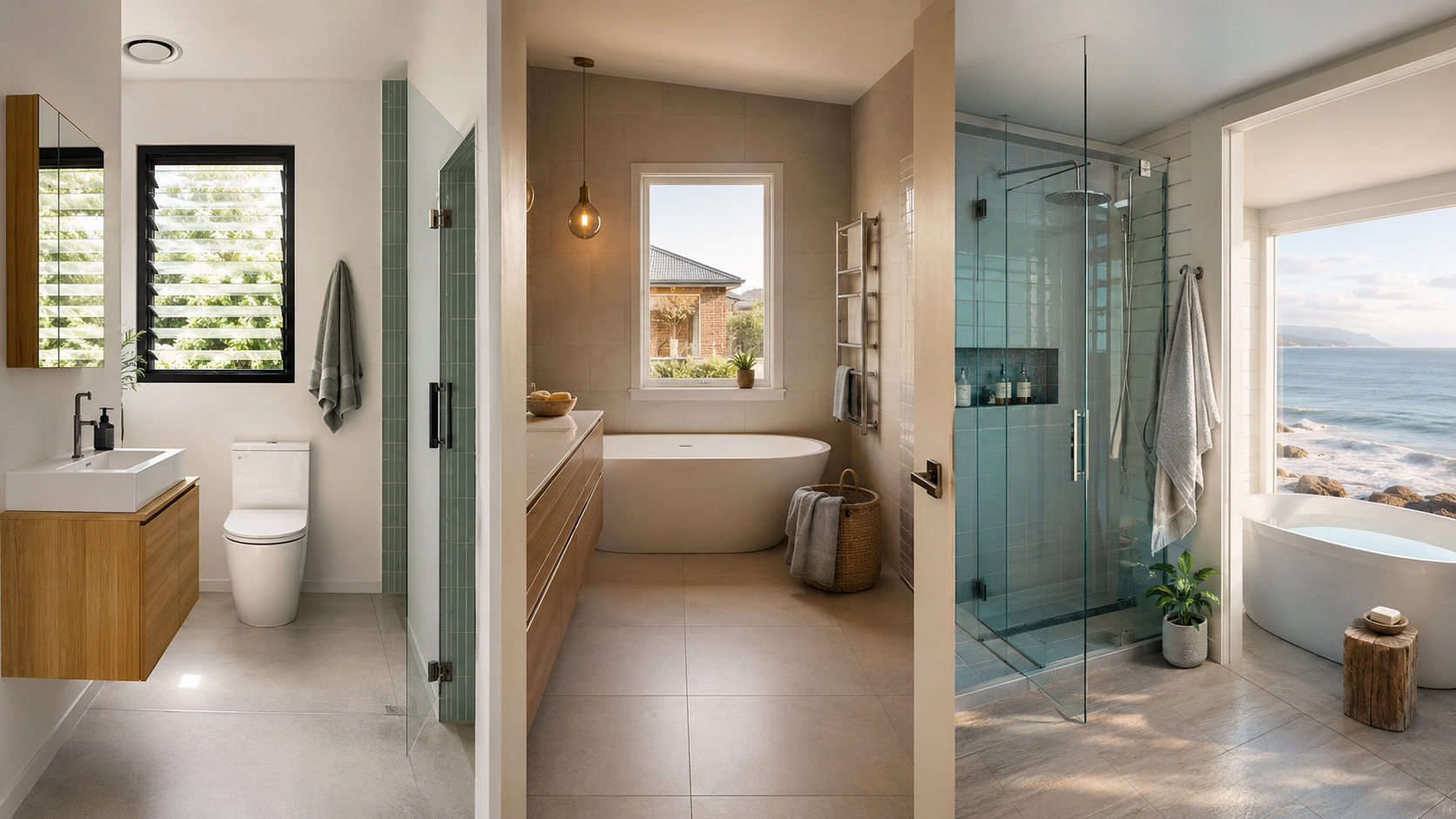
The New Zealand bathroom is not simply a smaller version of an international trend.
It reflects local conditions.
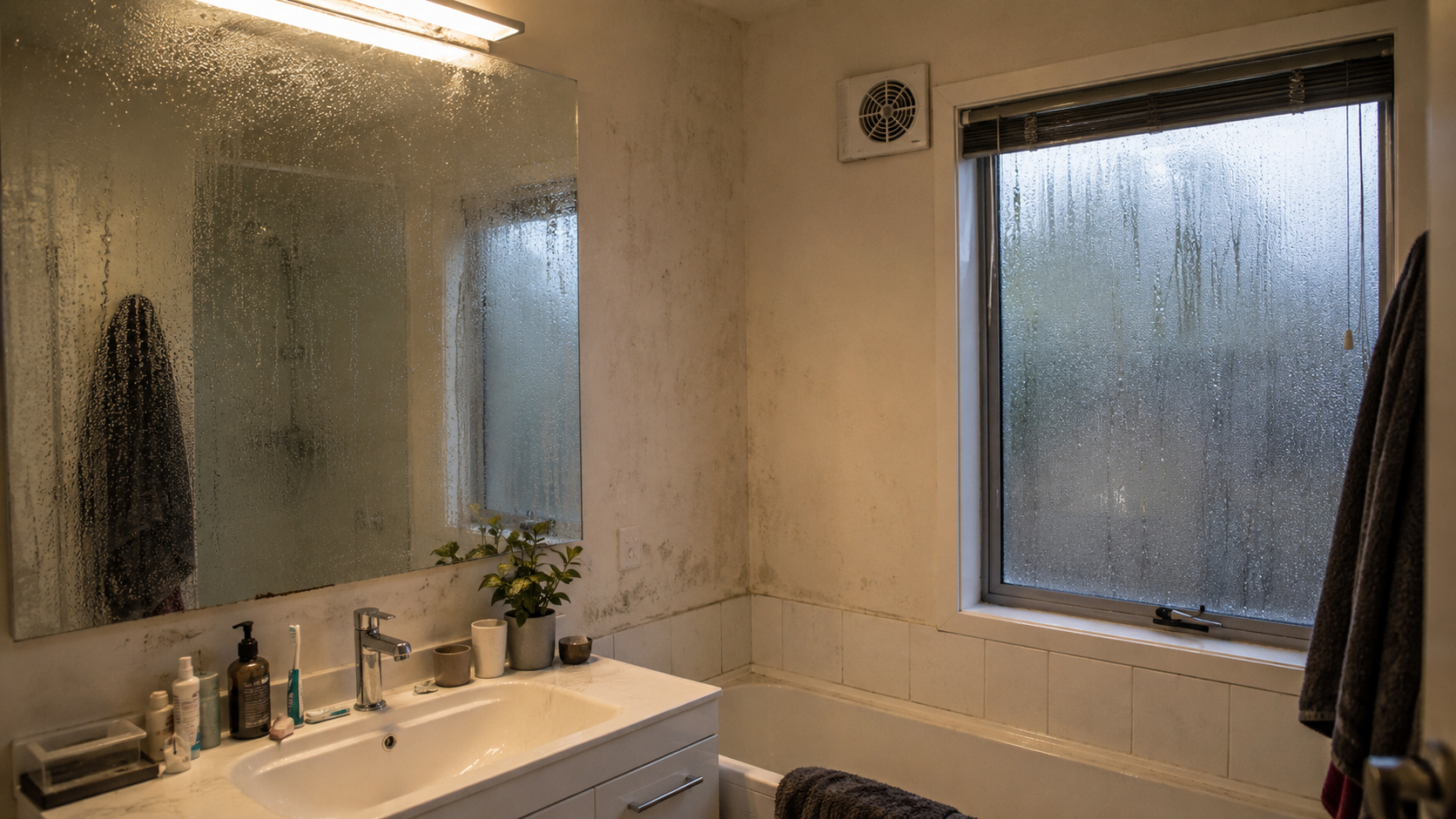
Auckland raises questions about moisture and ventilation.
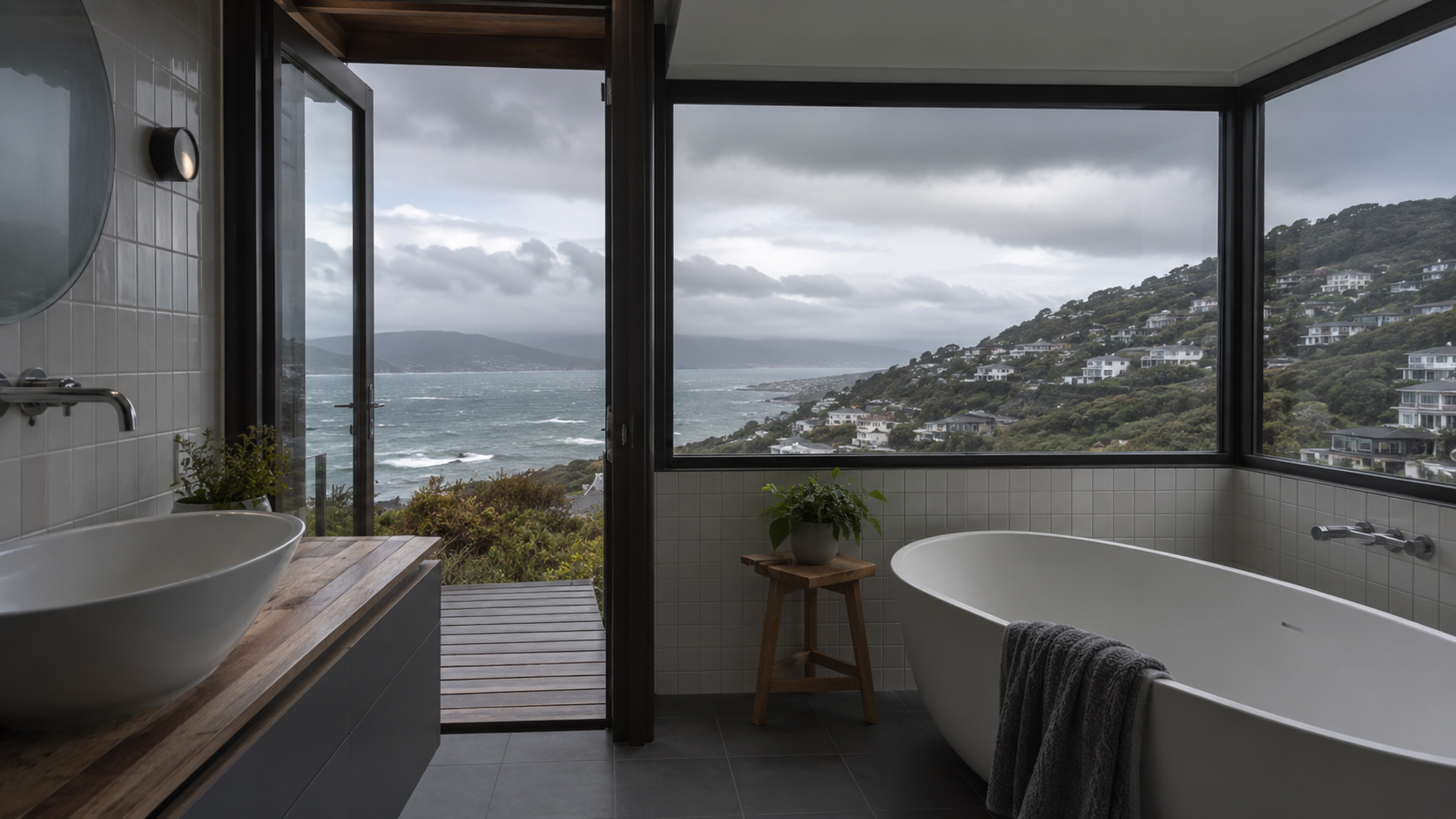
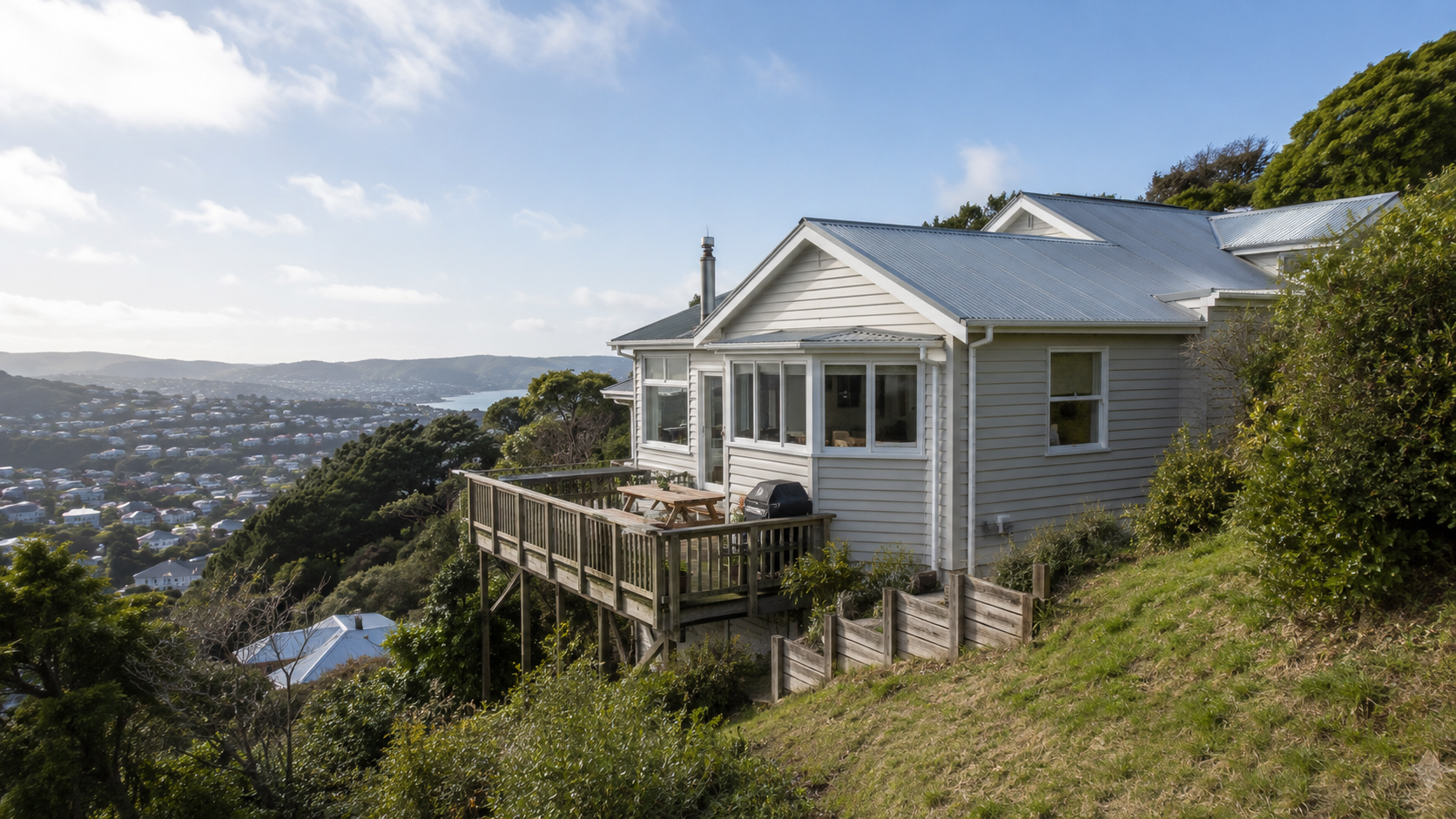
Wellington raises questions about exposure and resilience.
Christchurch carries questions about repair, rebuilding and trust.
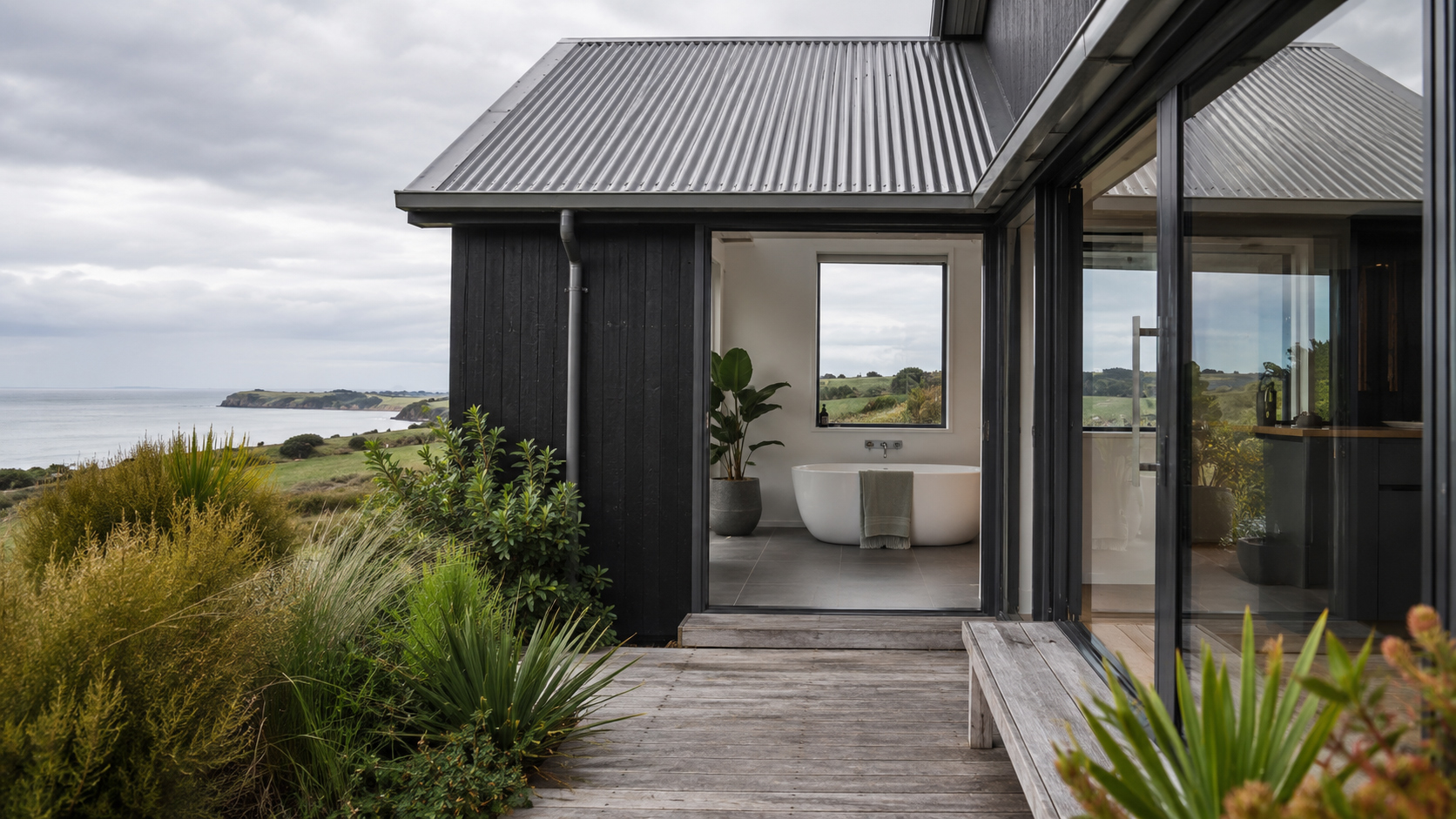
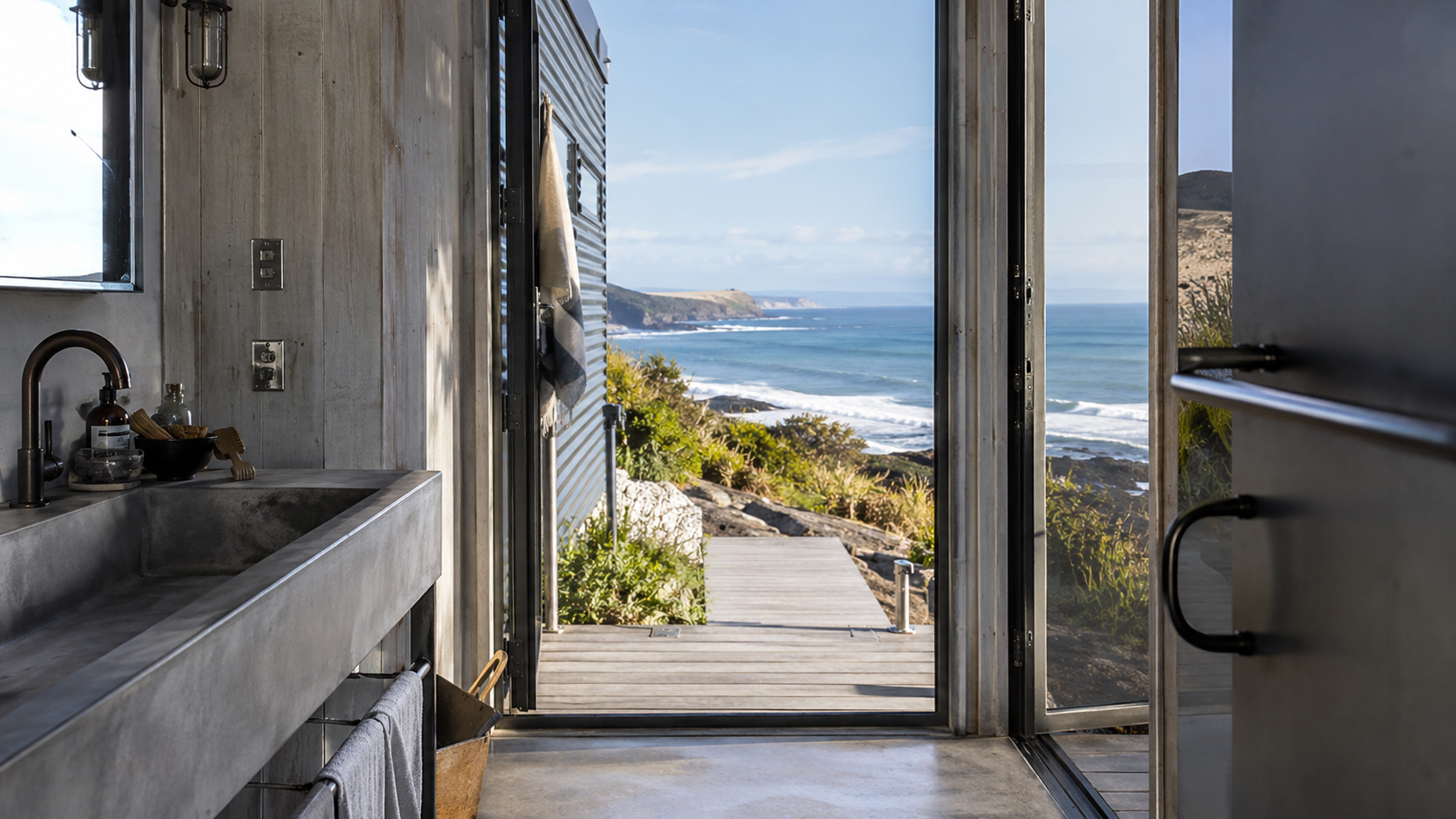
Coastal homes face salt and maintenance.
Holiday homes face distance, cold and periods of absence.
The bathroom becomes a place where these wider realities become visible.
This Book Is Not About Bathrooms Alone
At first glance, this book appears to be about bathrooms.
But the deeper subject is home.
Bathrooms provide a unique lens through which we can examine how people think about:
comfort,
health,
technology,
nature,
privacy,
ageing,
and belonging.
The bathroom is where many contradictions of modern life meet.
We want more convenience, but we worry about dependence.
We want more technology, but we value privacy.
We want sustainability, but we still live in a world of consumption.
We want beautiful spaces, but we also need practical ones.
These tensions are not problems to eliminate.
They are realities to understand.
Good design does not remove complexity.
It helps people navigate it.
Closing
The bathroom may be one of the smallest spaces in a home.
But it asks some of the biggest questions.
What does comfort mean?
What does care look like?
What kind of homes do we want to create?
And what does the way we design our private spaces say about the way we understand life itself?
To study the bathroom is not to study a room.
It is to study people.